
Df-OS Insights
Explore thought leadership, technical guides, and industry reports on AI-ready manufacturing, shopfloor digitization, and connected operations.
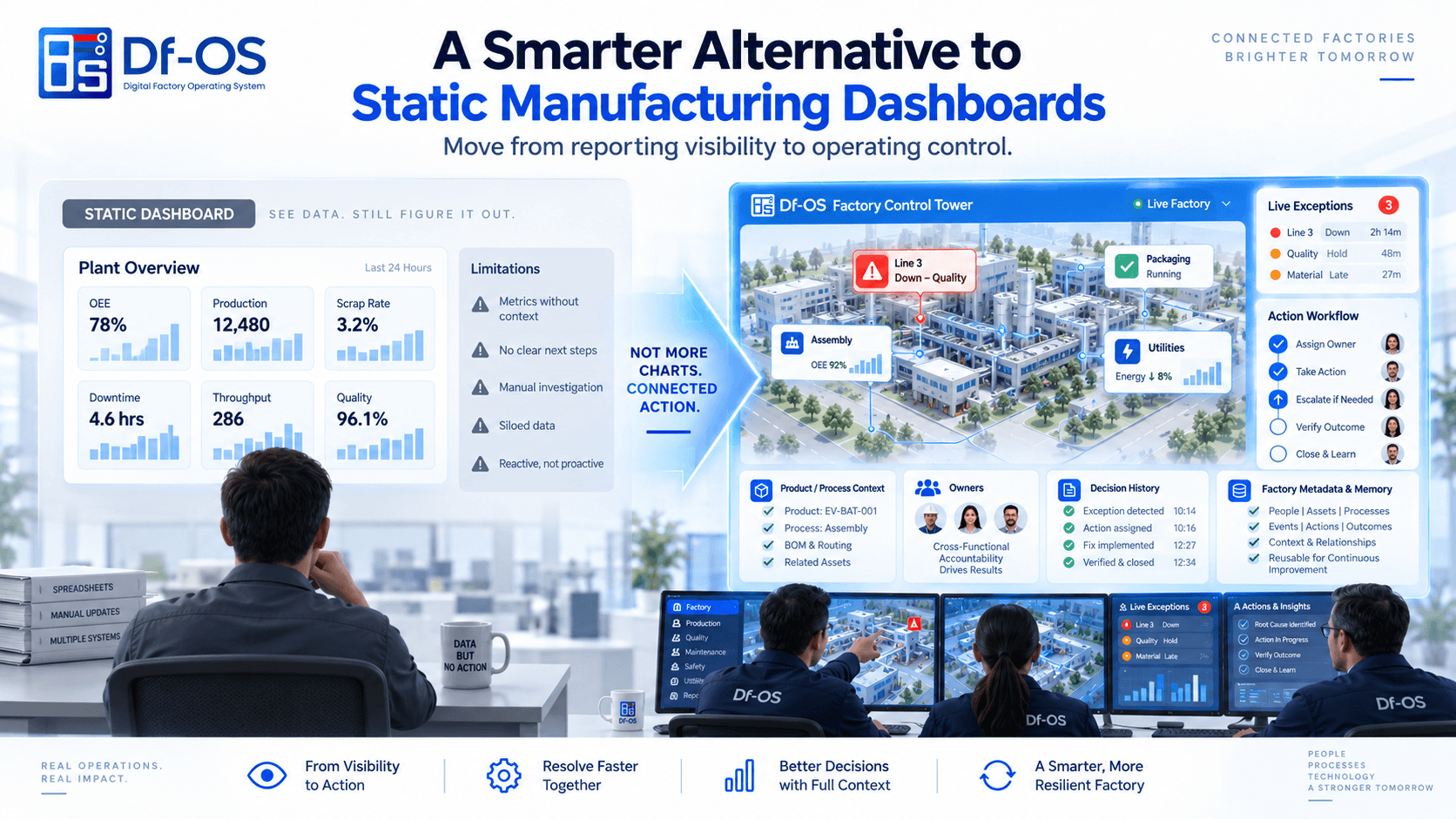
A Smarter Alternative to Static Manufacturing Dashboards
A comparison of static manufacturing dashboards and a connected Factory Control Tower that links metrics to live events, context, owners, workflows, escalation and verified closure.
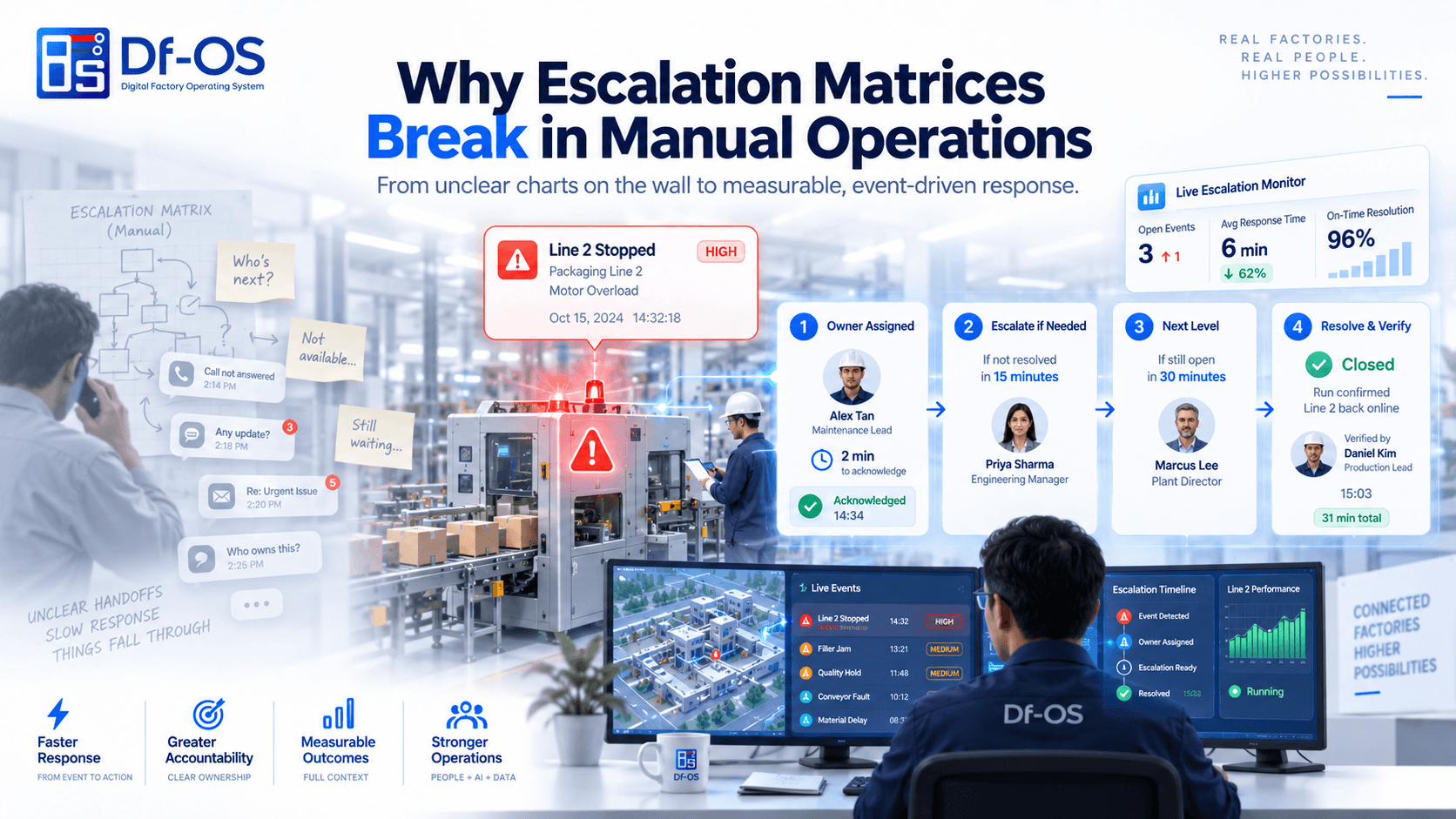
Why Escalation Matrices Break in Manual Operations
Why manual factory escalation matrices fail and how event-driven workflows connect measurable triggers, ownership, response time, escalation, closure evidence and learning.
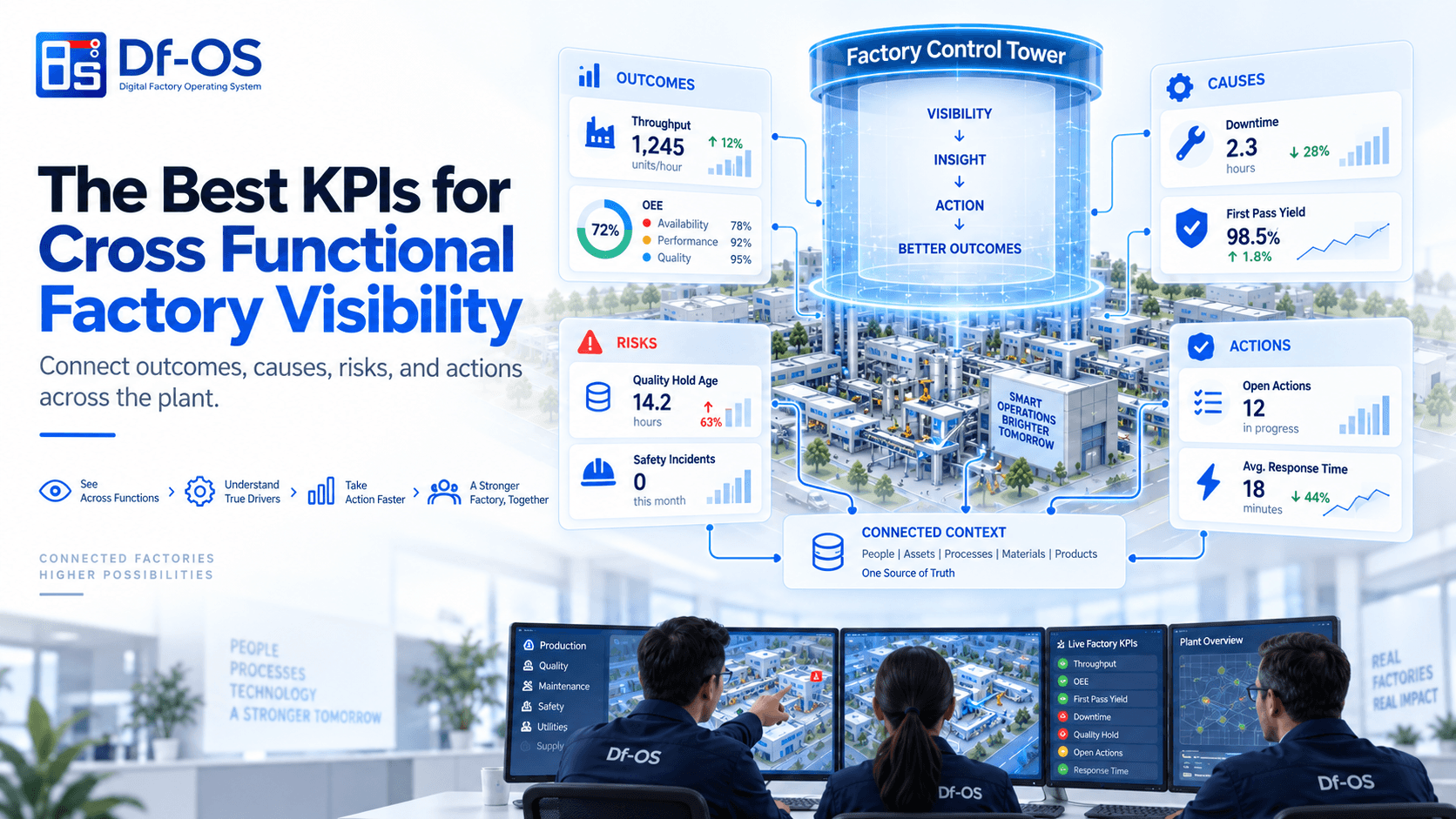
The Best KPIs for Cross Functional Factory Visibility
A four-level KPI framework connecting plant outcomes, operating causes, forward risks and action closure across production, quality, maintenance, safety and utilities.
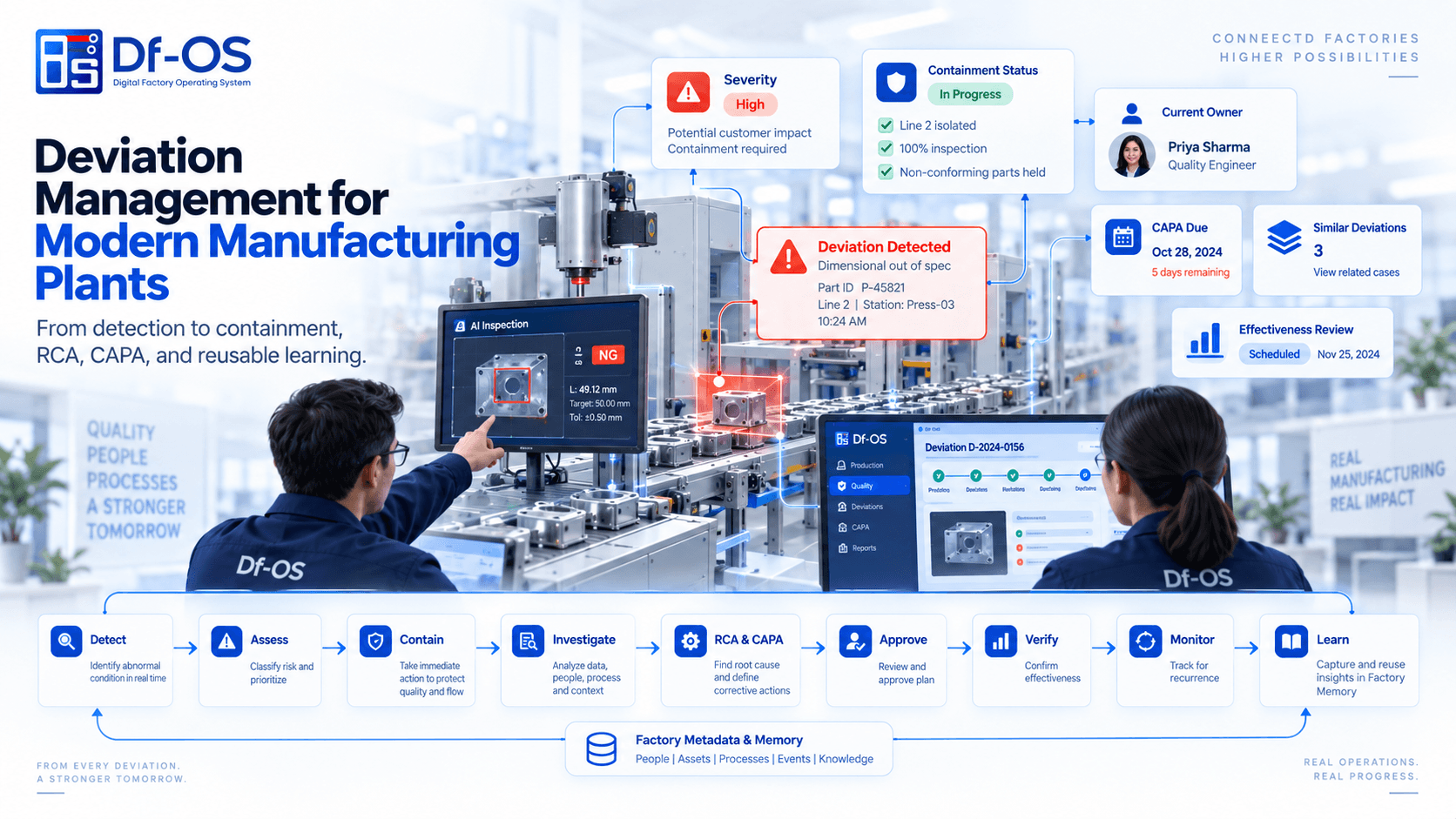
Deviation Management for Modern Manufacturing Plants
A connected manufacturing deviation lifecycle from detection and containment through RCA, CAPA, effectiveness review, recurrence monitoring and reusable operating memory.
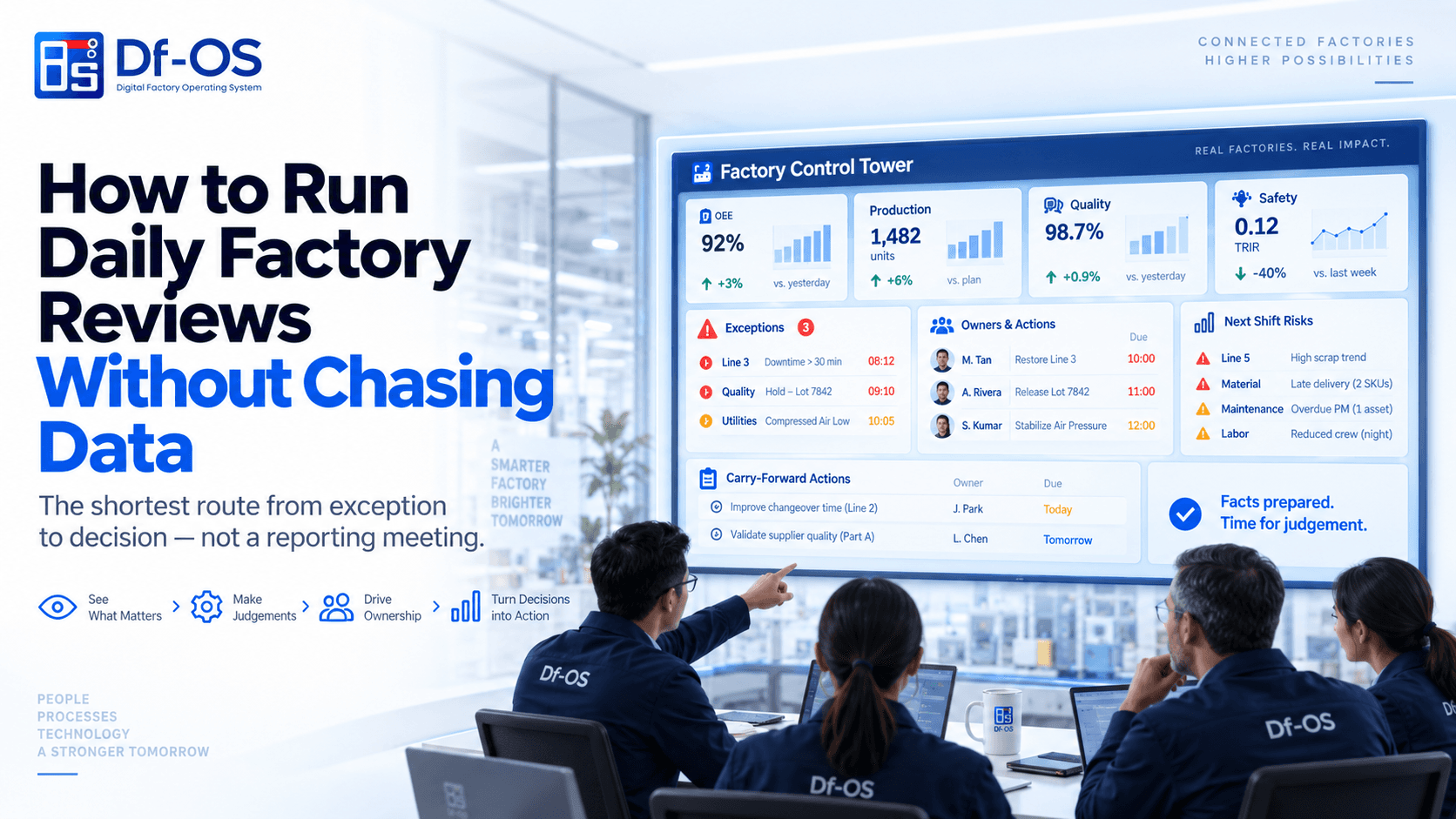
How to Run Daily Factory Reviews Without Chasing Data
A practical 30-minute daily factory review model that starts with current exceptions, connects metrics to causes and owners, and carries decisions through to closure.
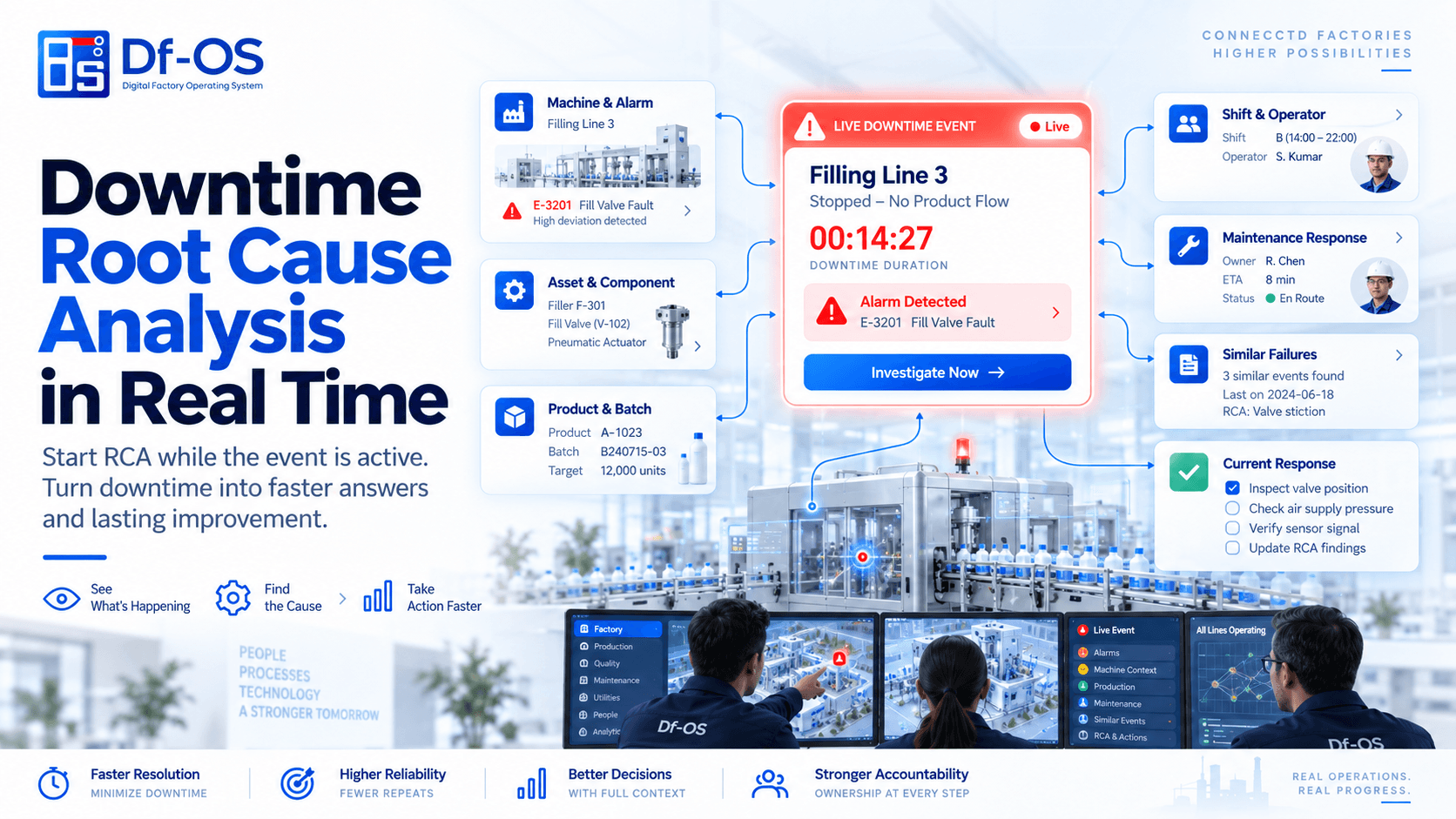
Downtime Root Cause Analysis in Real Time
A real-time downtime RCA model that connects machine events, product and shift context, maintenance response and repeat-failure history while the event is still active.
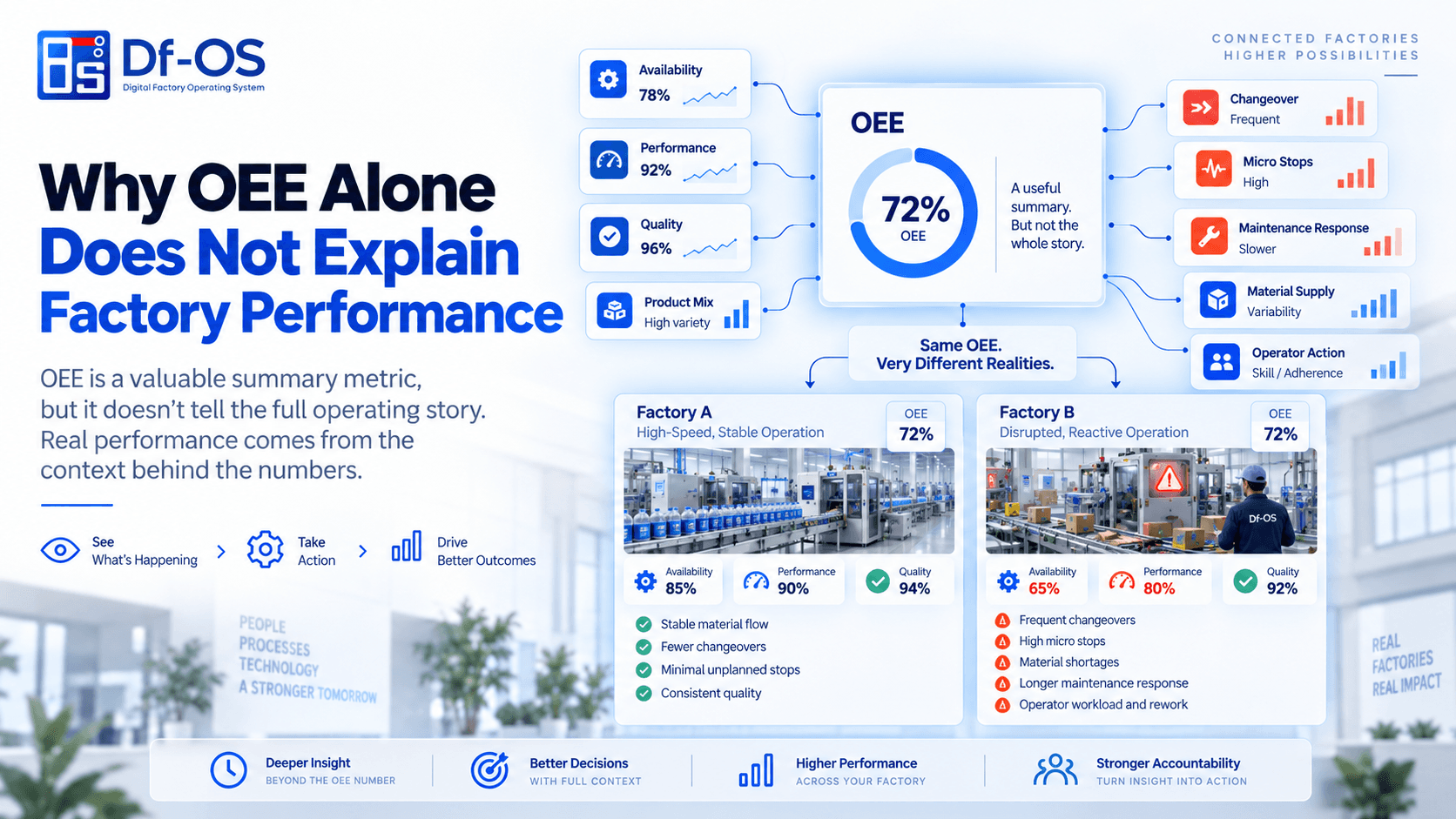
Why OEE Alone Does Not Explain Factory Performance
OEE is valuable for measuring availability, performance and quality, but factory leaders need product, process, people and action context to understand why performance changed.
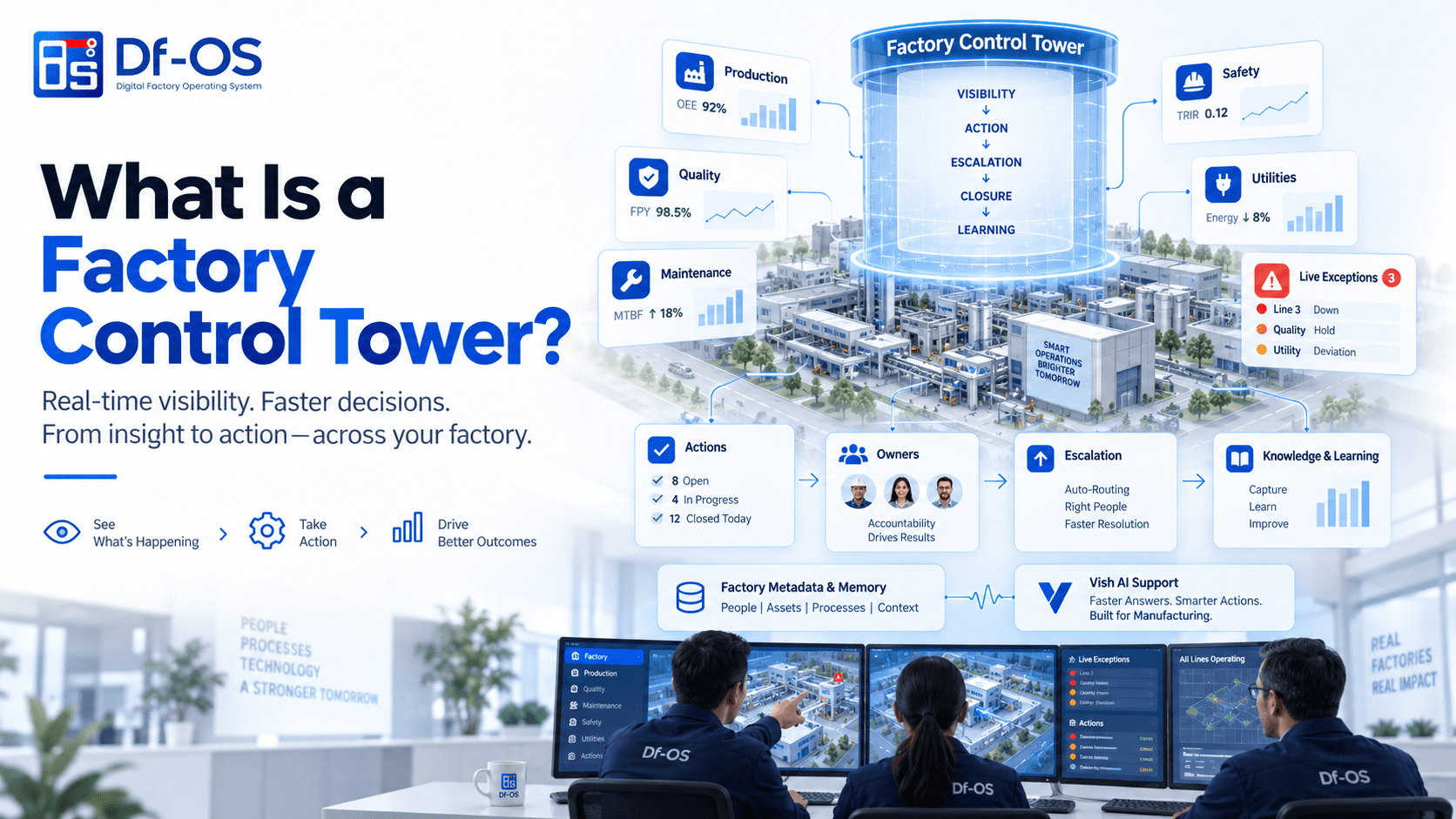
What is a Factory Control Tower?
A practical definition of a Factory Control Tower and how it connects live conditions, operating context, ownership, workflow action and learning across the plant.
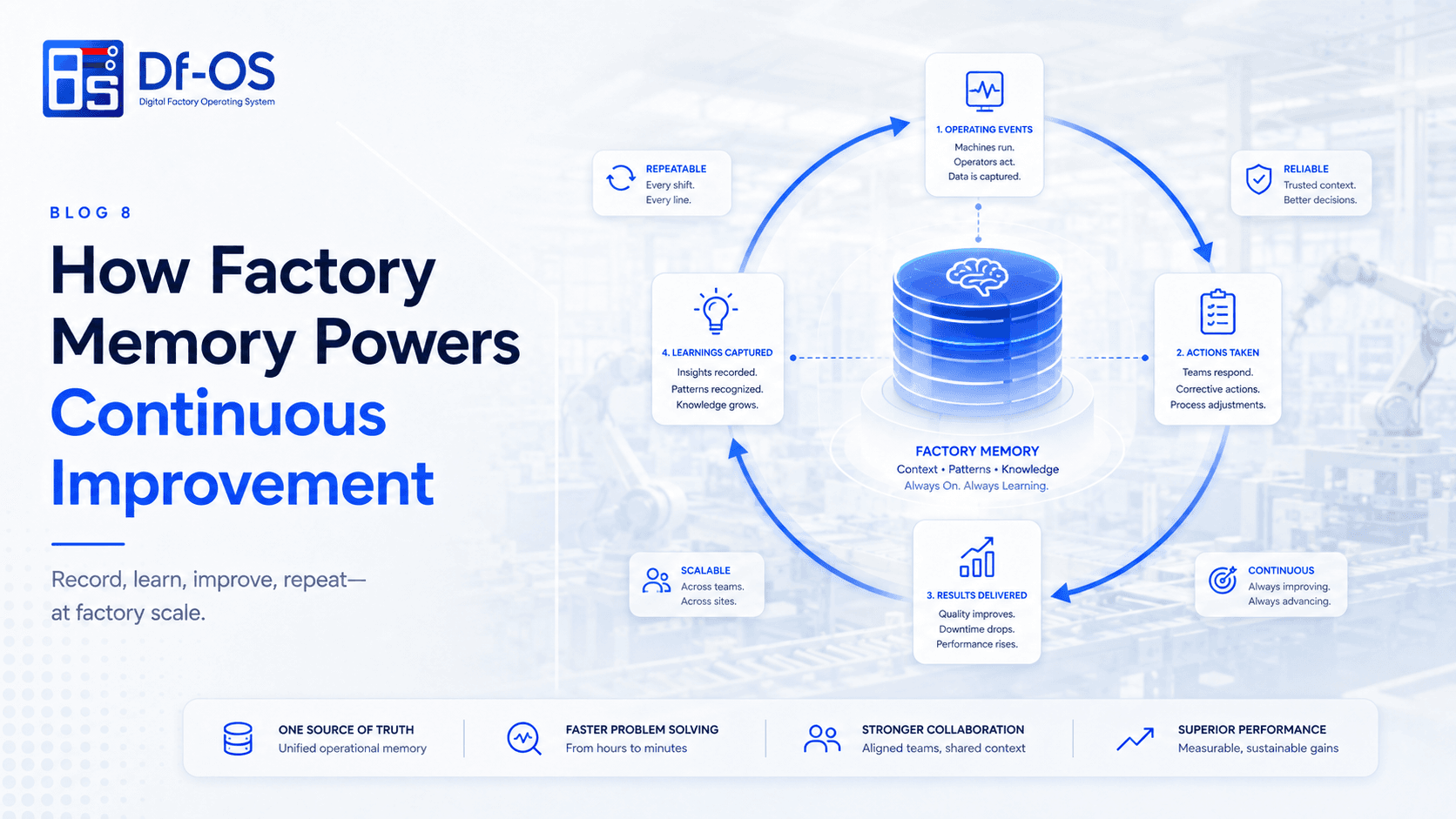
The Hidden Cost of Spreadsheet Operations in Factories
Spreadsheets become costly when they run live factory processes, creating duplicate work, delayed decisions, weak ownership and lost context.
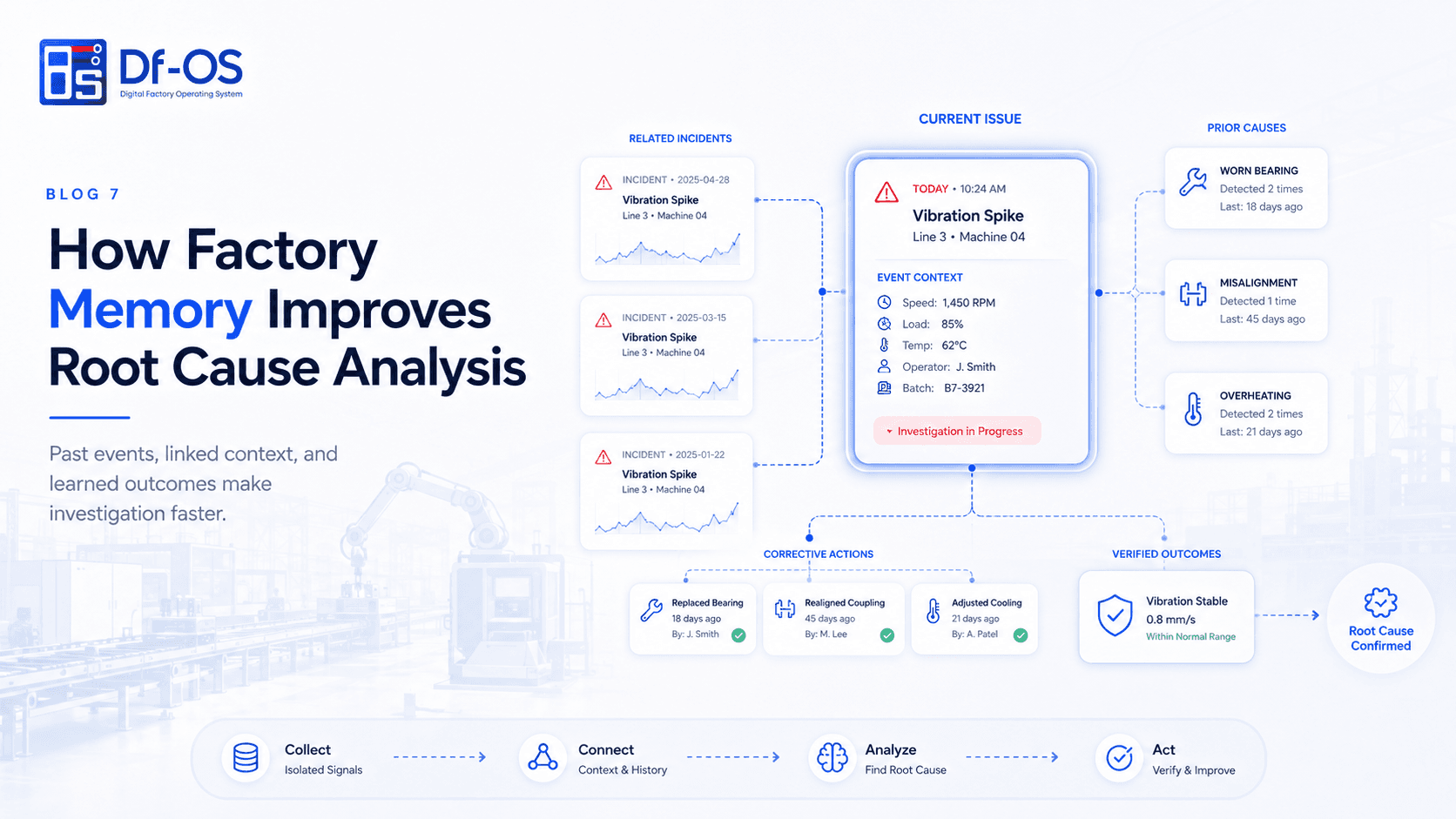
Why Shift Handover Is a Data and Context Problem
A reliable shift handover transfers operating context, risks, actions and decisions - not just output numbers or a spreadsheet.
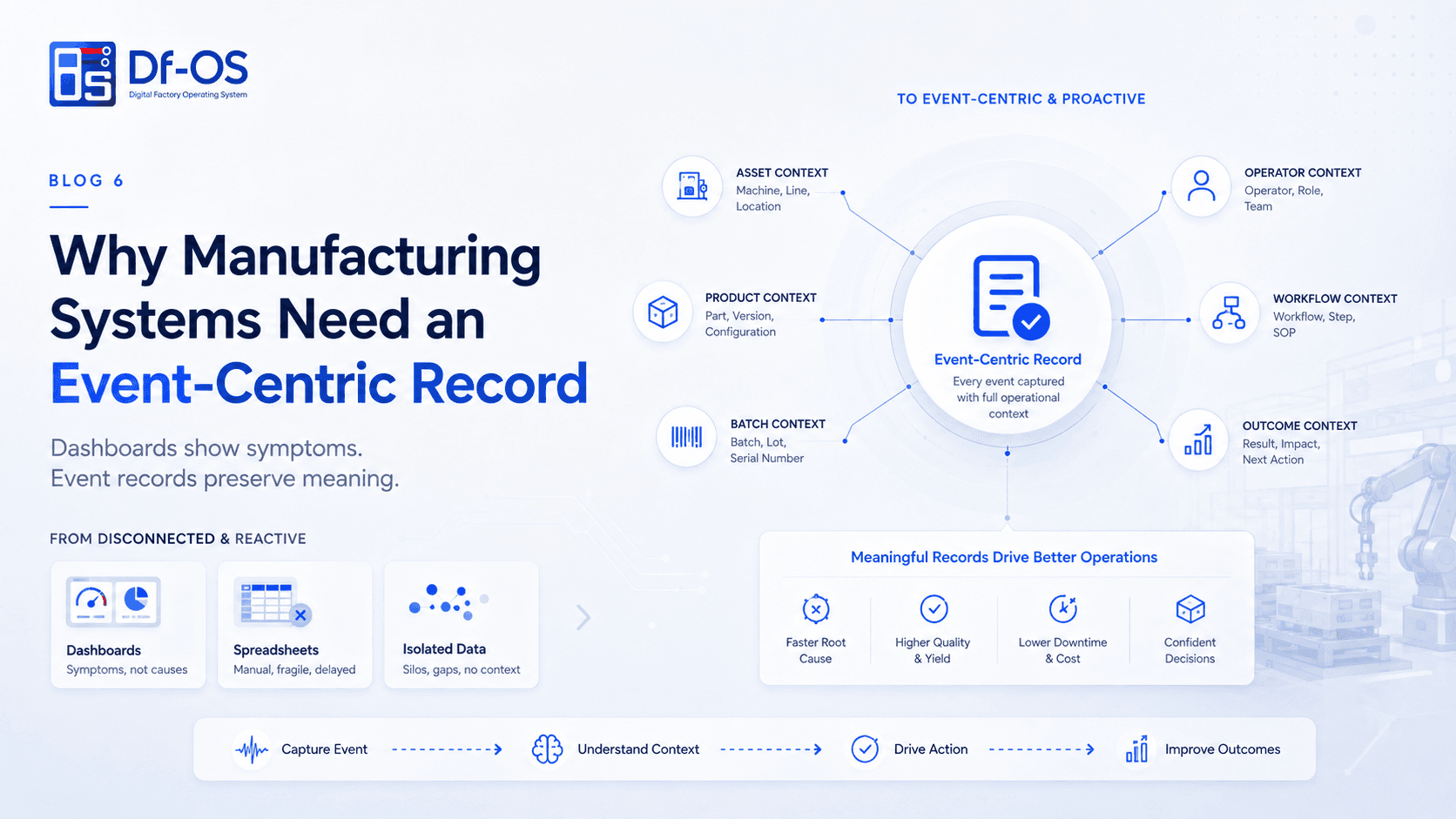
What a 4M Knowledge Graph Means on the Shopfloor
See how a 4M knowledge graph connects Man, Machine, Material and Method around factory events so teams can analyse relationships instead of isolated records.
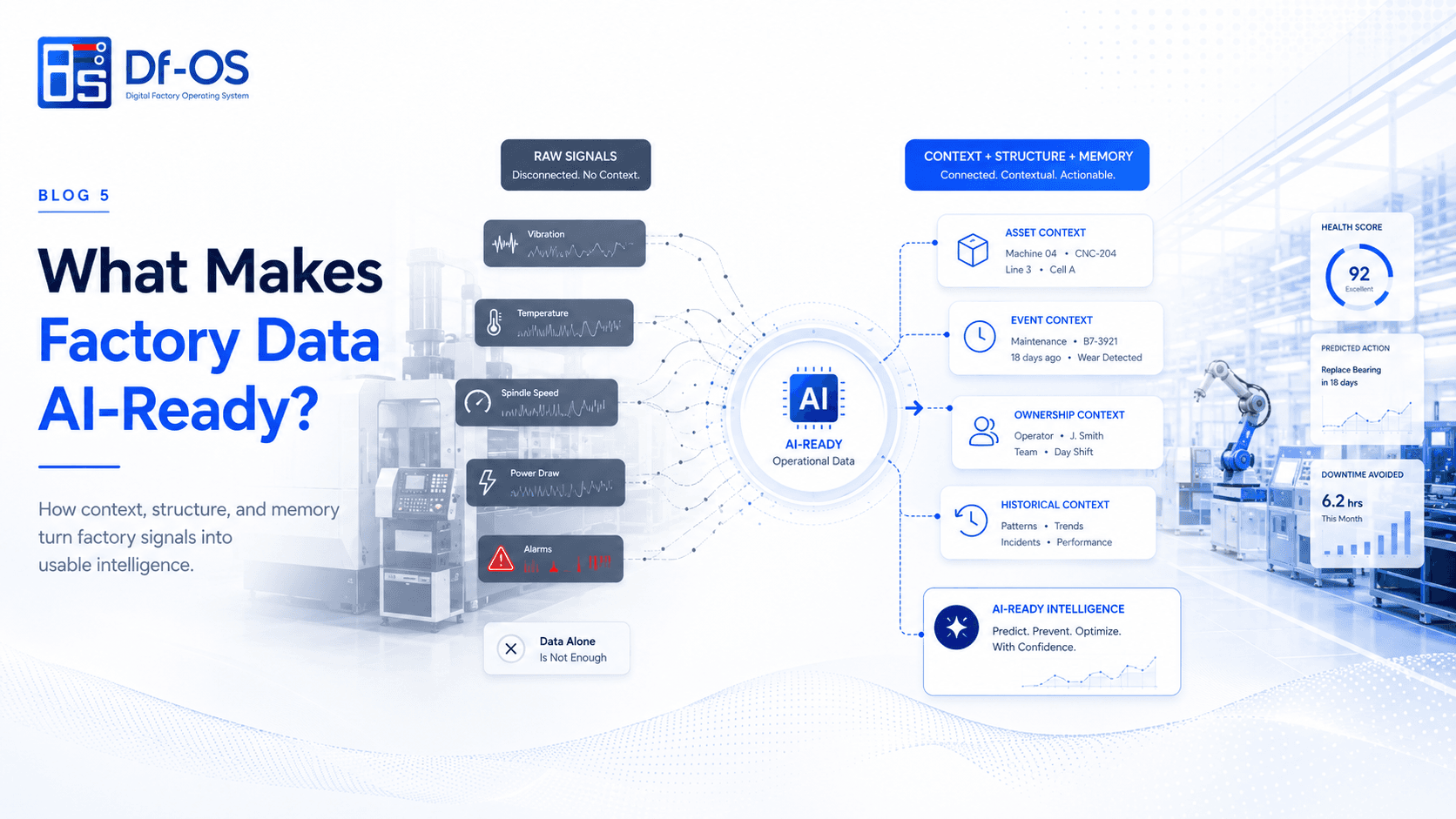
Building Factory Metadata Without Rip and Replace
Build Factory Metadata & Memory around existing brownfield assets and systems by starting with one operating event and expanding the connected context in phases.
Digital Thread vs Factory Metadata & Memory
Digital thread and Factory Metadata & Memory solve different traceability problems: lifecycle continuity versus operating-event context, decisions and outcomes.

How RCA and CAPA Build Factory Metadata & Memory
Turn RCA and CAPA from closed records into reusable operational learning by connecting evidence, 4M context, causes, actions, ownership and effectiveness.

Why Raw Machine Data Is Not Enough
Raw machine data shows what changed, but factory intelligence depends on the product, process, people, workflow and decision context around the signal.

What Good Factory Data Architecture Looks Like
A practical seven-layer architecture for connecting factory sources, secure edge acquisition, enterprise systems, event context, workflows, operational memory and decision intelligence.

Why Brownfield Factories Need a Modern Operating Layer
Brownfield factories need a modern operating layer because their critical operations are spread across legacy machines, PLCs, SCADA, ERP, paper, spreadsheets and informal communication. An operating layer connects these assets and workflows without requiring a complete rip and replace programme.

AI in Indian Manufacturing: Moving from Pilots to Operating Capability
Indian manufacturers can move from AI pilots to operating capability by standardising critical workflows, connecting brownfield machines and systems, creating Factory Metadata & Memory and embedding recommendations into owned decision processes. The priority is not the model alone. It is the operating context and adoption around it.

Industry 4.0 vs Industry 5.0: What Changes for Factory Leaders?
Industry 4.0 focuses on connected, automated and data driven manufacturing. Industry 5.0 builds on that foundation by placing human centricity, sustainability and resilience alongside productivity. For factory leaders, the change is not less technology. It is a broader definition of value and responsibility.

What WEF Lighthouse Factories Teach Mid-Market Manufacturers
WEF Lighthouse factories show that digital transformation creates value when manufacturers solve important operating problems, embed intelligence into daily work, involve the workforce and scale successful use cases. Mid-market manufacturers can apply these principles without copying the size or investment level of global leaders.

Df-OS vs MES: The Architectural Difference
MES primarily manages production execution, work orders, recipes, genealogy and manufacturing records. Df-OS acts as a broader factory operating layer that connects workflows, departments, machine signals, systems and decision history. In many plants, Df-OS complements MES rather than replacing it.

Factory Metadata & Memory Explained for Manufacturers
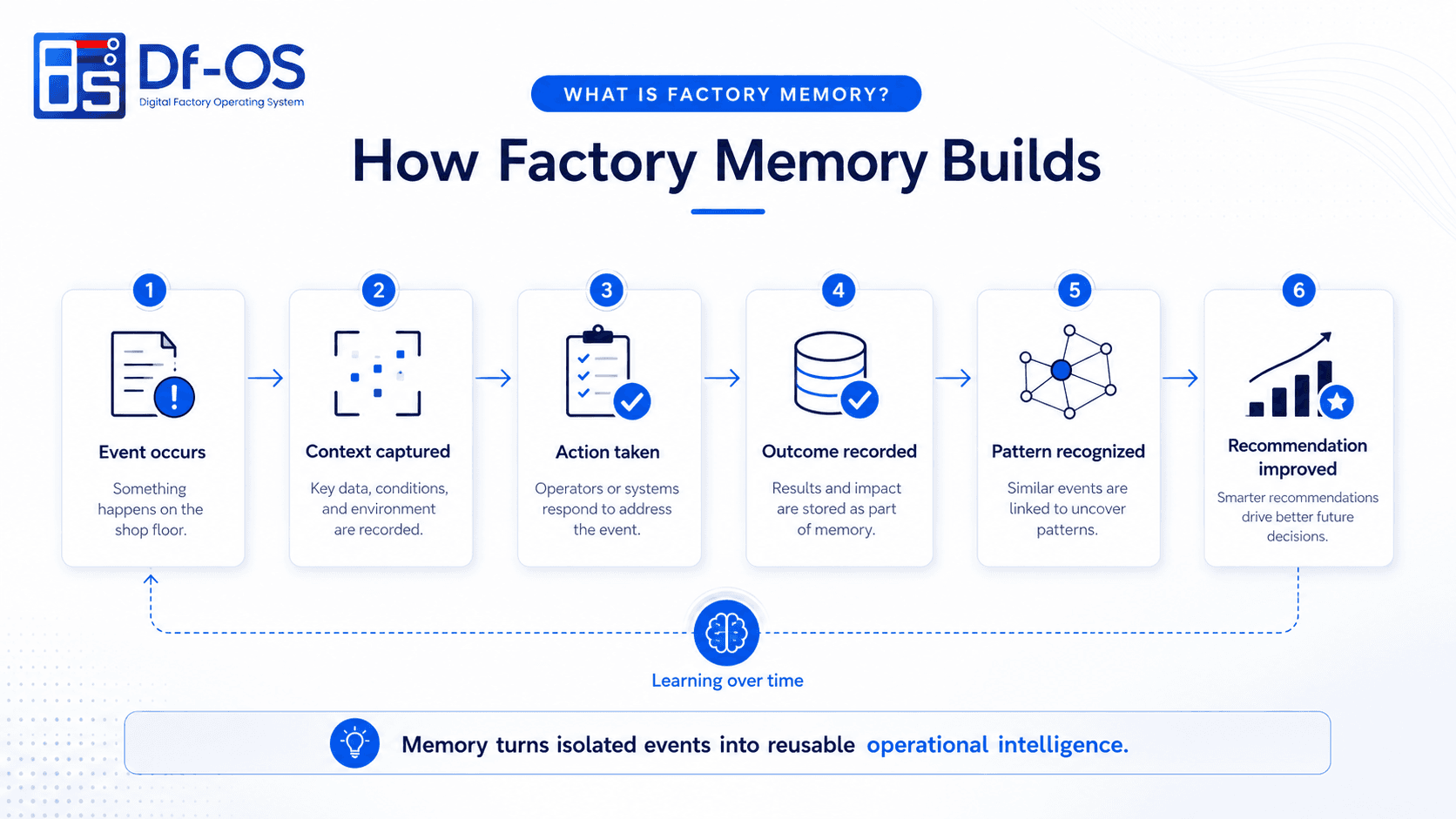
Factory Metadata & Memory is the structured operating record that connects what happened, where and when it happened, which people, machines, materials and methods were involved, what action was taken and what worked before. Metadata provides context. Memory preserves the history and outcome.

What Is an Autonomous Factory?
An Autonomous Factory is a manufacturing operation where connected systems continuously sense conditions, understand operating context, recommend or execute defined actions and improve performance through closed feedback loops. Human governance, safety controls and clear accountability remain central.

What Is an AI-Native Digital Factory Operating System?
An AI-Native Digital Factory Operating System is a connected operating layer that digitises factory workflows, links machines and enterprise systems, creates Factory Metadata & Memory and supports intelligent decisions across production, quality, maintenance, safety and utilities. It works with existing ERP, MES, PLC and SCADA systems rather than treating each process as a separate digital island.