
What a 4M Knowledge Graph Means on the Shopfloor
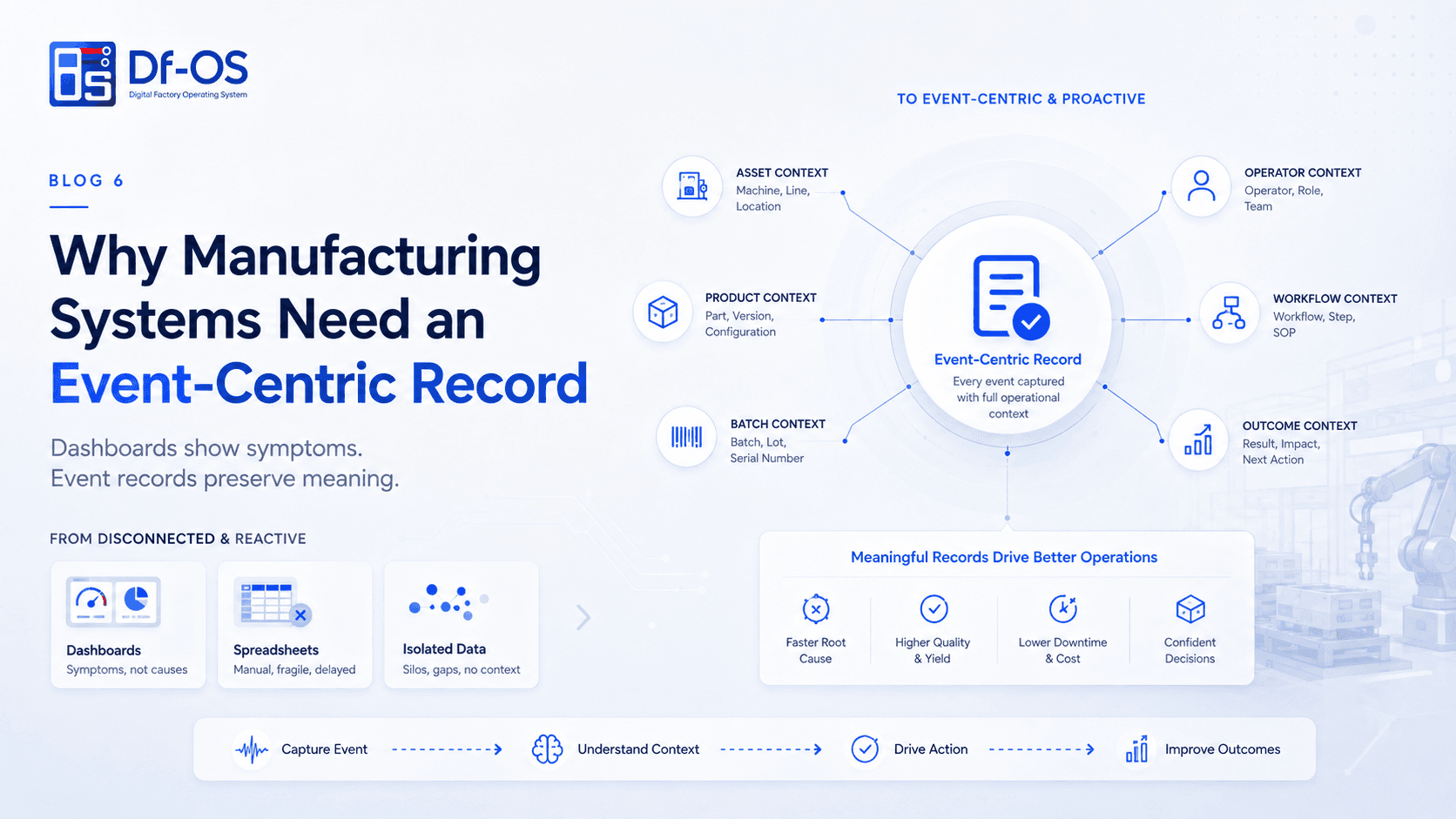
Manufacturers have used the 4M model for decades.
Man, Machine, Material and Method provide a practical way to examine why a process failed or varied. The limitation is not the model. The limitation is that the evidence for each M often sits in a different place.
A 4M knowledge graph connects those relationships around the actual factory event.
It allows the plant to see how people, equipment, materials and methods interacted, which actions followed and what outcome resulted.
From categories to relationships
A traditional 4M analysis asks whether each category contributed to the problem.
A knowledge graph asks how the specific elements were connected.
For example:
- Which operator was assigned to the line?
- What was the operator's training status?
- Which machine and component were involved?
- Which material lot was running?
- Which SOP revision applied?
- Which setpoints were active?
- Which inspection detected the issue?
- Which action corrected it?
The graph is not a visual diagram for its own sake. It is a structure that allows systems and people to follow the relationships.
The four dimensions
Man
The people dimension may include:
- Role
- Shift
- Skill
- Training
- Certification
- Assignment
- Observation
- Action
- Approval
The objective is not to create a blame system. It is to understand the work context and identify where instruction, skill or workload influenced the event.
Machine
The equipment dimension may include:
- Asset
- Component
- Condition
- Alarm
- Setpoint
- Maintenance status
- Calibration
- Tooling
- Change history
Material
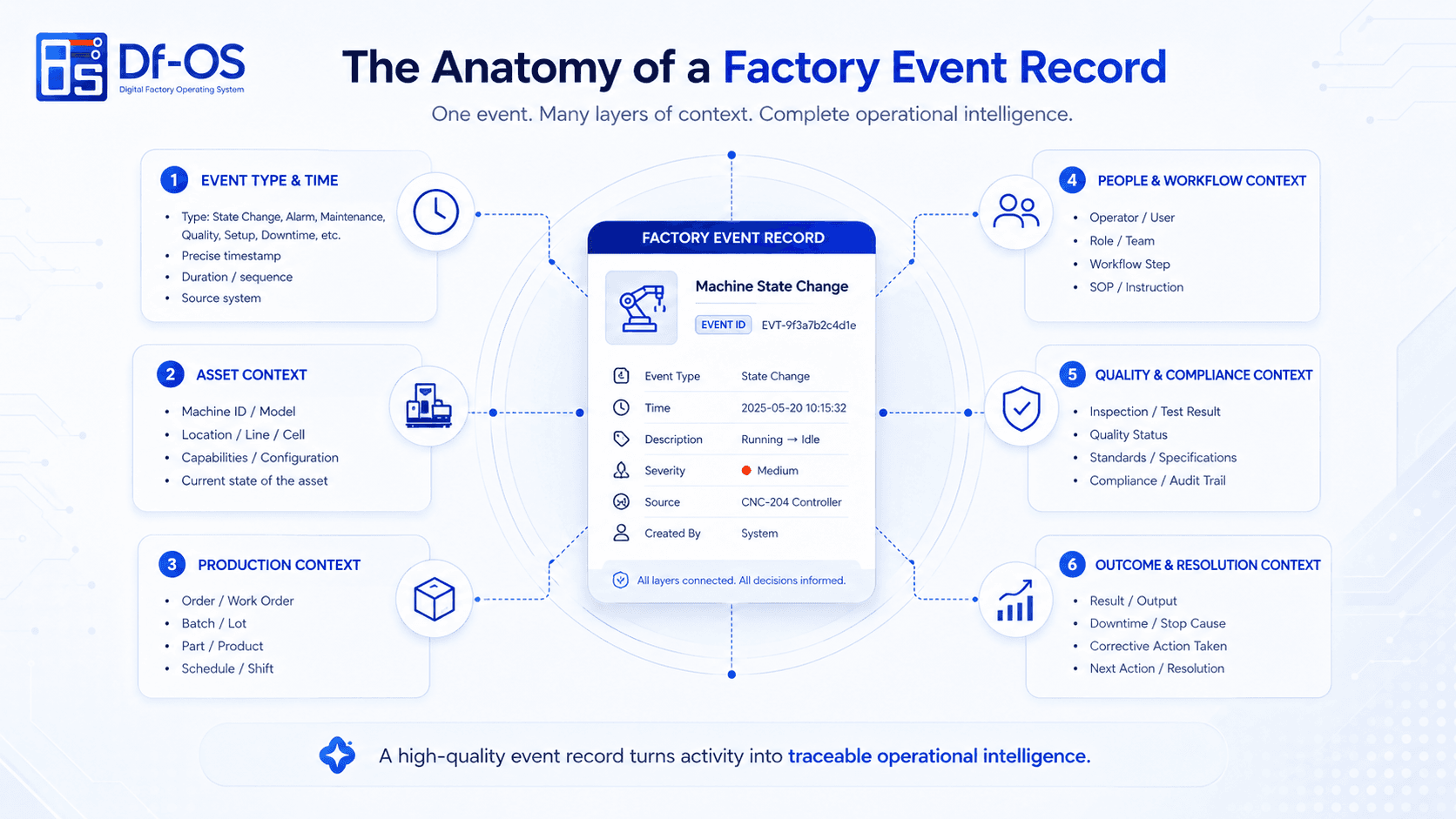
The material dimension may include:
- Item
- Lot
- Supplier
- Specification
- Inspection result
- Storage condition
- Consumption point
- Batch relationship
Method
The method dimension may include:
- Process step
- SOP
- Recipe
- Control plan
- Inspection method
- Changeover procedure
- Approval rule
- Standard parameter
A quality deviation example
A seal defect appears on a packaging line.
A disconnected investigation reviews operator, machine, material and method records separately.
A connected 4M model shows:
- A recently trained operator was assigned
- The machine was running after a guide replacement
- The material lot came from a different supplier batch
- A revised changeover method had been introduced
- The defect appeared only at the higher line speed
The investigation can now test relationships rather than reading four unrelated reports.
Why the graph improves Factory Metadata & Memory
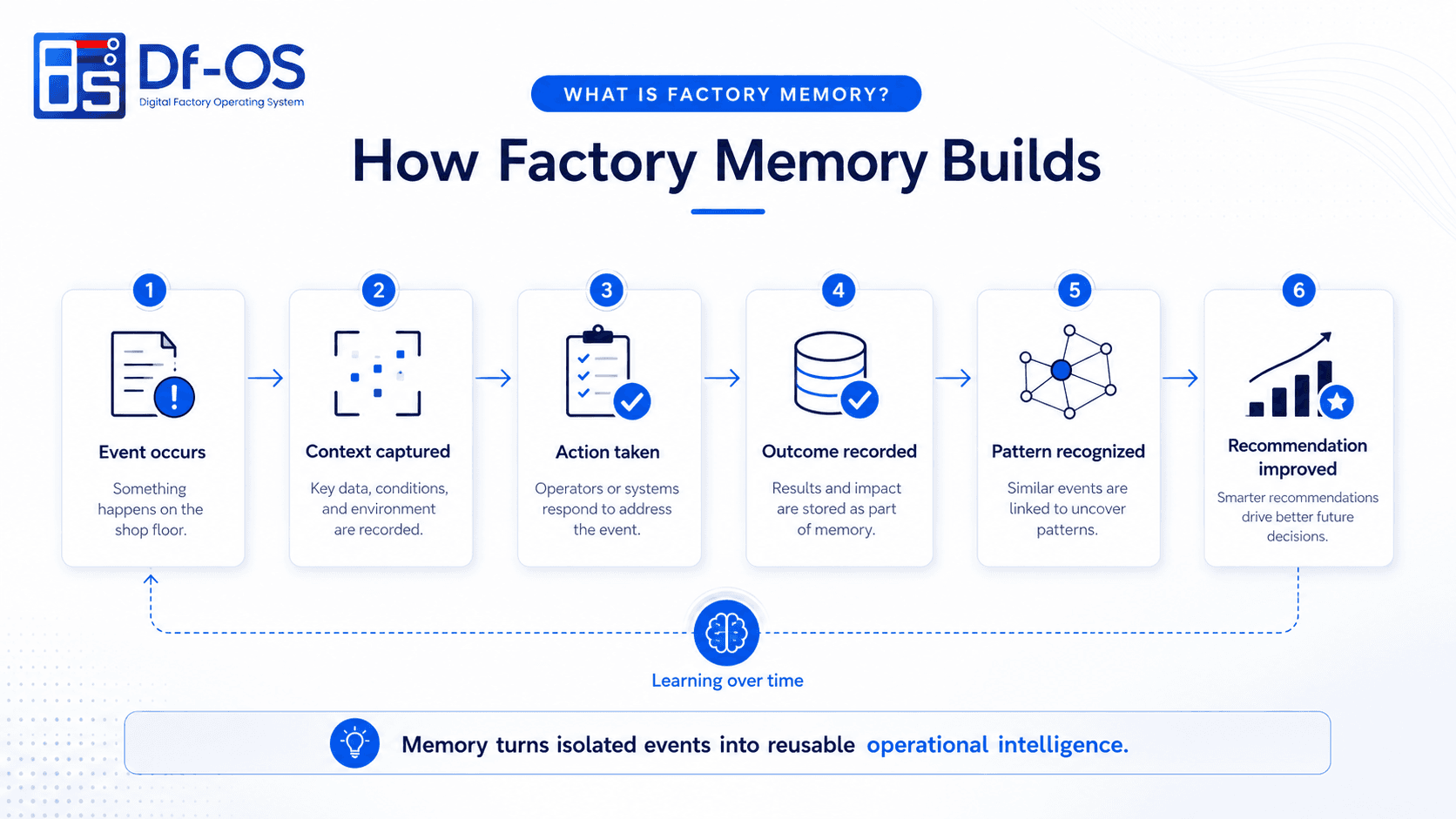
Factory Metadata & Memory depends on connected context.
The 4M graph provides a stable structure for that context. It allows events to be compared across the same dimensions.
A future team can search for:
- Similar defects on the same machine with different materials
- Repeated breakdowns after a specific maintenance method
- Quality variation associated with a process revision
- Training gaps linked to a particular task
The graph makes the factory's operating history more reusable.
How Vish AI can use the relationships
Vish AI can use the connected 4M structure to answer more useful questions.
Instead of asking only how many defects occurred, the plant can ask:
- Which 4M factors changed before the defect increased?
- Did the same material lot affect other lines?
- Which method was used during successful runs?
- Which machine condition appears most often with the event?
- Which corrective action reduced recurrence?
The output remains a decision support input. People review evidence and remain responsible for the conclusion.
A graph does not remove data governance
Relationships are only useful when identifiers and definitions are controlled.
The factory should define:
- Asset hierarchy
- Product and material identifiers
- Role and skill definitions
- SOP and revision control
- Event taxonomy
- Source ownership
- Permission and privacy
The graph should connect authoritative sources rather than create uncontrolled duplicates.
4M and autonomous operations
A bounded autonomous action may depend on several 4M conditions.
A system should not recommend the same response when:
- A different product is running
- The operator lacks the required authorisation
- The material is under hold
- The machine is in a maintenance state
- A revised method changes the acceptable limit
The 4M context helps define when a decision rule applies and when human review is required.
A practical starting point
Choose one repeated event and map:
- The people involved
- The equipment and condition
- The material and lot
- The method and revision
- The action and outcome
Then identify which relationships can be created automatically and which require structured human input.
The Df-OS role
Df-OS connects factory workflows and events across the 4M model. X-Konnect adds machine context. ERP, MES and quality systems can provide product, material and process information. The result becomes Factory Metadata & Memory that Vish AI can use.
Final perspective
The 4M model becomes more powerful when it moves from a workshop tool to a connected operating structure.
A 4M knowledge graph helps the factory see relationships, reuse investigations and make industrial intelligence more context aware.
Ready to Modernize Your Factory Operating Layer?
Discover how Df-OS digitizes shopfloor workflows, connects brownfield machines, and creates Factory Metadata & Memory without rip-and-replace disruption.
Frequently Asked Questions
No. It can strengthen fishbone and other investigation methods by providing connected evidence and history.
Stay Ahead of Manufacturing AI
Join 15,000+ plant managers and industrial leaders receiving our bi-weekly reports on AI agents, shopfloor data operations, and the future of smart factories.
Df-OS Editorial Board
Industry experts mapping the future of connected digital factory operating systems and manufacturing intelligence.
Related Insights & Guides
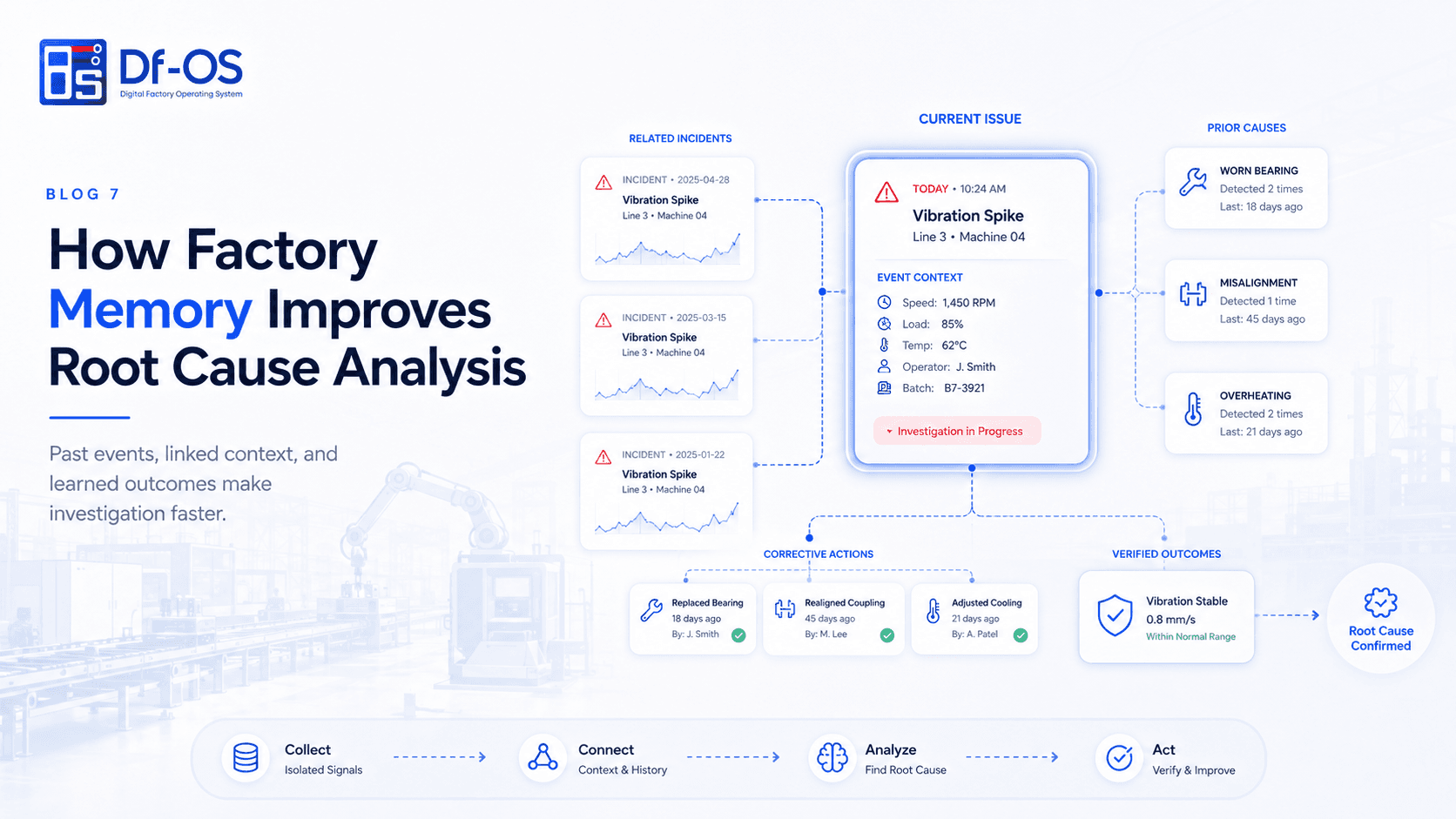
Why Shift Handover Is a Data and Context Problem
A reliable shift handover transfers operating context, risks, actions and decisions - not just output numbers or a spreadsheet.
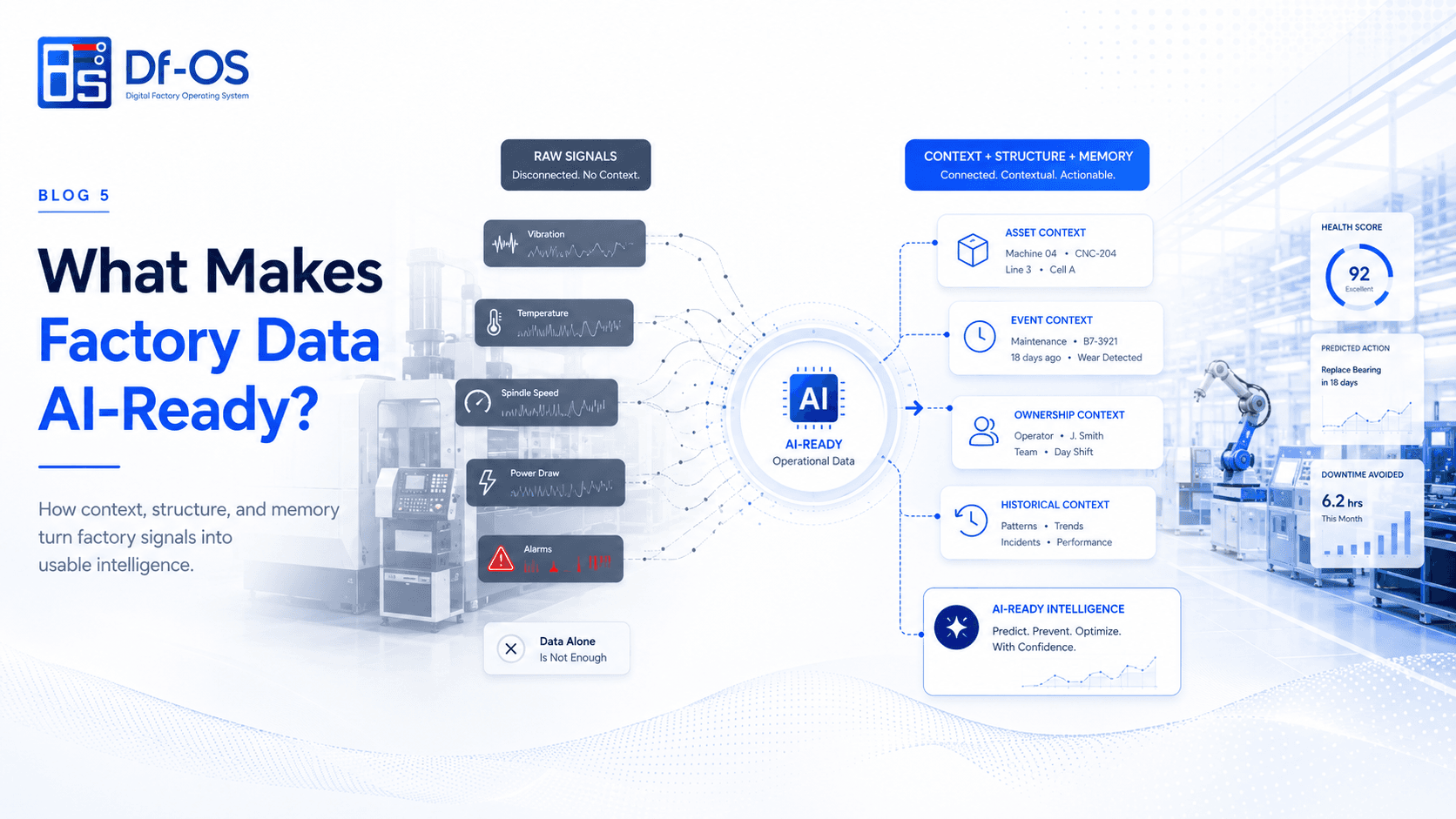
Building Factory Metadata Without Rip and Replace
Build Factory Metadata & Memory around existing brownfield assets and systems by starting with one operating event and expanding the connected context in phases.
Digital Thread vs Factory Metadata & Memory
Digital thread and Factory Metadata & Memory solve different traceability problems: lifecycle continuity versus operating-event context, decisions and outcomes.