
Why Shift Handover Is a Data and Context Problem
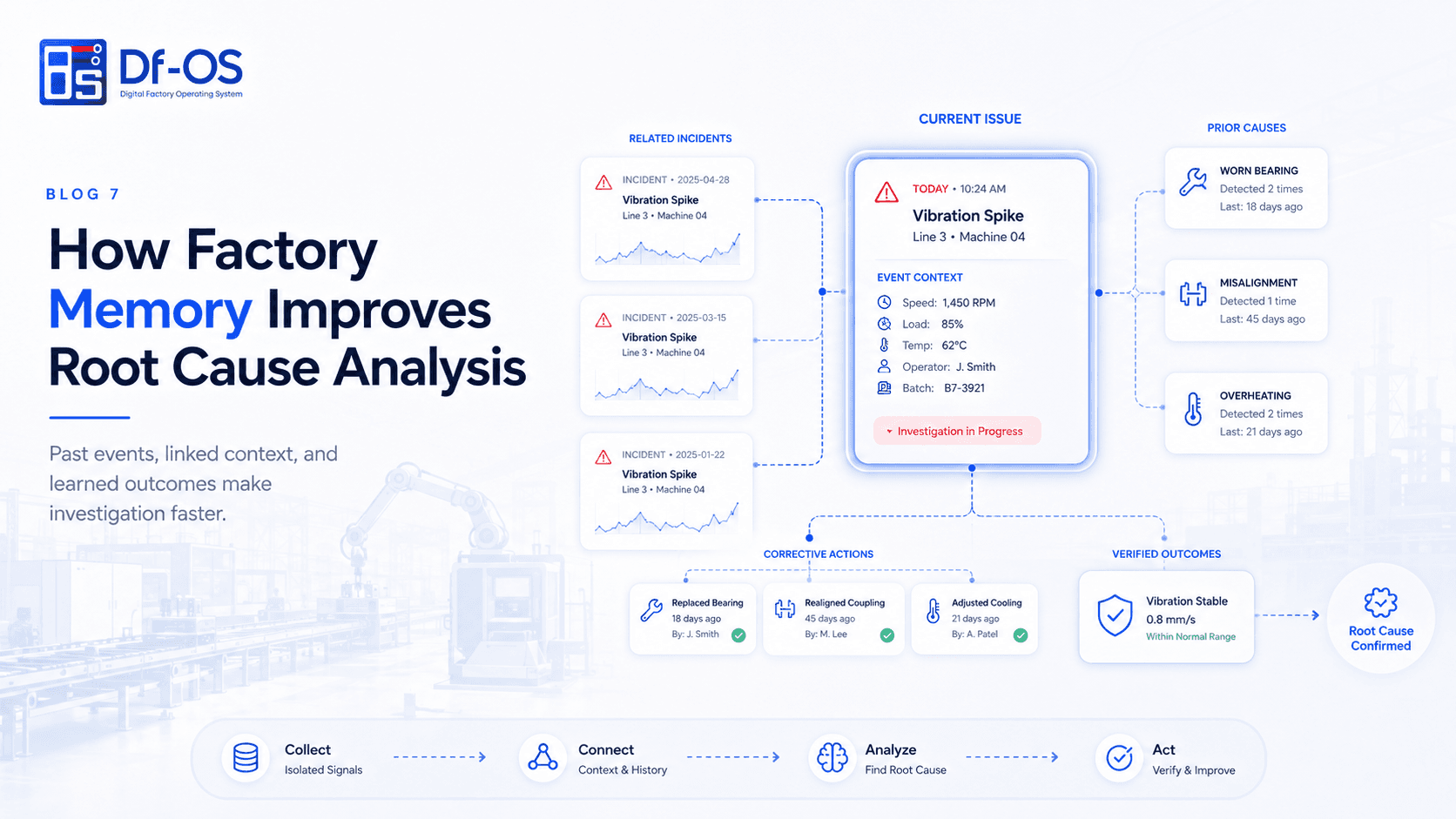
A shift handover is not a report. It is the transfer of operating responsibility from one team to another.
The incoming shift needs more than output numbers. It needs to know what changed, which risks remain open, which actions are pending and what decision may be required next.
When this information is spread across verbal updates, logbooks, spreadsheets, messages and local screens, the plant loses context at the exact moment responsibility changes hands.
Why handovers fail
A weak handover usually has one or more of these problems:
- Information is recorded after the event
- The update depends on individual memory
- Different departments use different formats
- Open actions are not carried forward clearly
- Machine events are separated from operator observations
- Quality holds are not linked to production status
- Maintenance work is described without impact
- The incoming shift cannot distinguish information from priority
The result is repeated checking, delayed response and avoidable loss during the first part of the shift.
The seven elements of a reliable shift handover
1. Production status
Plan, actual output, current product, running condition, changeover status and expected constraints.
2. Equipment condition
Current breakdowns, temporary repairs, abnormal signals, maintenance work and assets requiring attention.
3. Quality status
Open deviations, holds, inspection results, process concerns and product release conditions.
4. Material and utility status
Material availability, lot changes, utility constraints and conditions that may affect production.
5. Safety and compliance
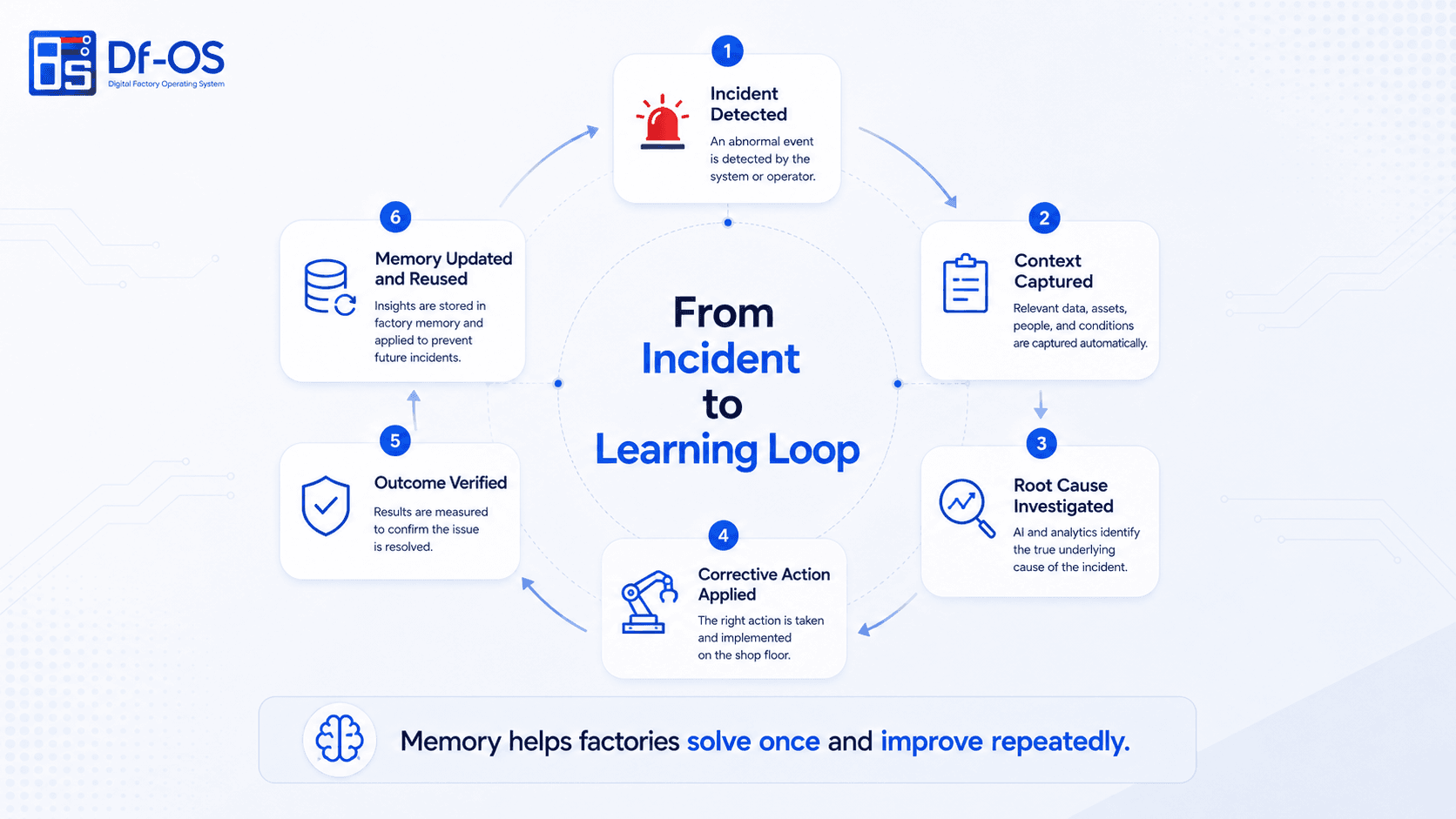
Open permits, isolations, incidents, observations and work that cannot continue without approval.
6. Actions and ownership
Each open action should show owner, due time, escalation and expected result.
7. Decisions required
The incoming team should know which issues may require judgement, approval or leadership support.
Why a spreadsheet is not enough
A spreadsheet can organise the handover, but it often remains disconnected from the events behind it.
The shift team may manually copy downtime, production and quality data into one file. The file shows the result, but not always the timeline or current action.
A connected handover should update from the operating workflows themselves.
A machine stop should appear with the maintenance response. A deviation should appear with containment status. A permit should appear with its validity and responsible role. The handover becomes a live operating view rather than a late summary.
The difference between data and context
Data says the line lost 42 minutes.
Context says the loss began after changeover, involved repeated sensor trips, remains under temporary correction and requires engineering review before the next run of the same product.
The second statement helps the incoming shift make a decision.
How Df-OS supports shift continuity
Df-OS can connect production, quality, maintenance, safety and utility workflows into one shift record.
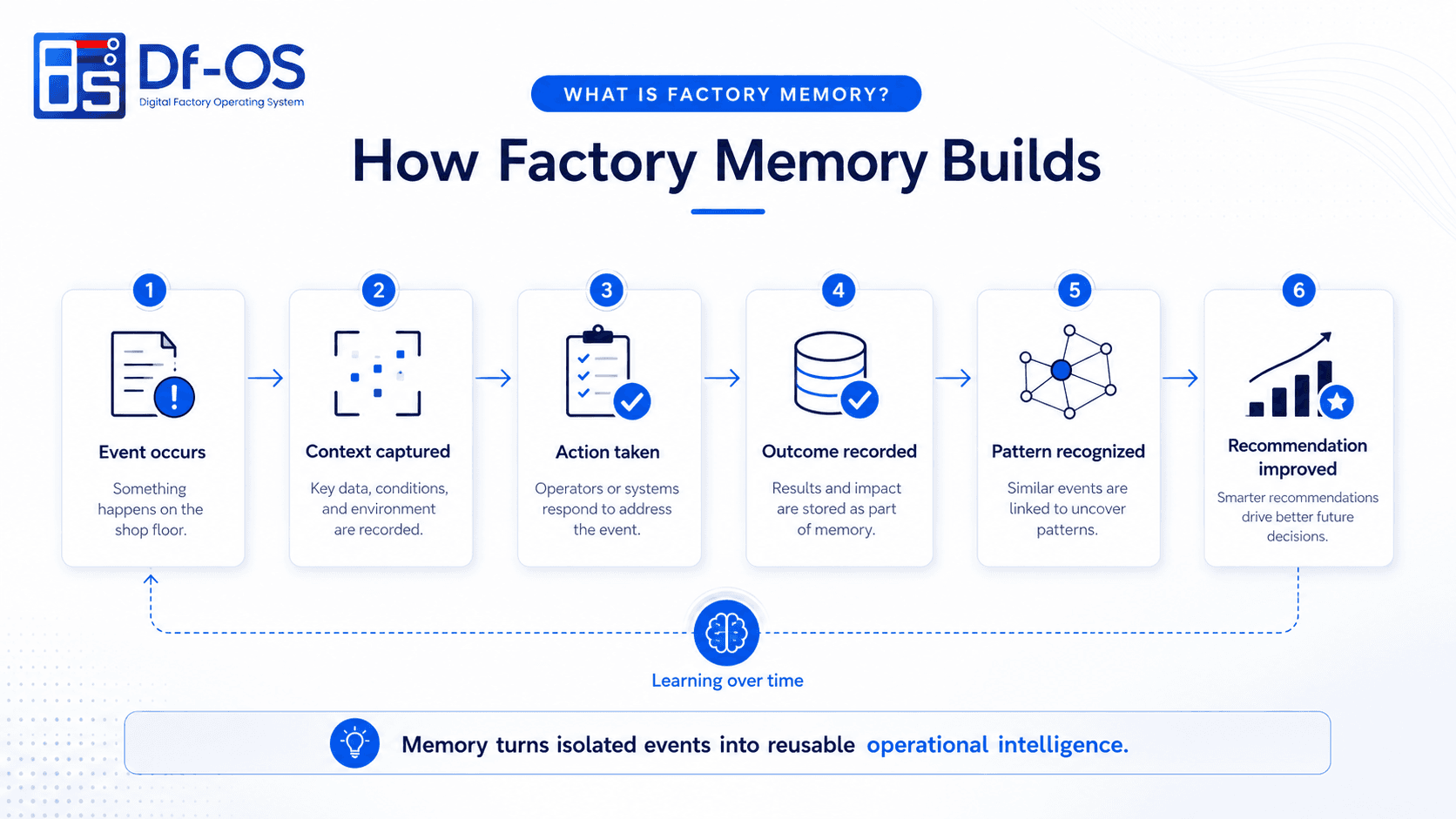
X-Konnect can add machine status and alarms. Open actions carry forward with ownership. The completed handover becomes part of Factory Metadata & Memory.
Vish AI can help summarise the shift around exceptions, repeated issues and unresolved risks, while supervisors retain responsibility for review and acceptance.
Handover and the Autonomous Factory
Autonomy depends on continuity.
A system cannot recommend or execute reliably if the operating context resets every eight or twelve hours.
A structured handover preserves the state of the plant across people and time. It allows future decision support to understand what is open, what changed and what should happen next.
A 15 minute handover structure
First five minutes: operating state
Review production, quality, equipment, safety and utility conditions.
Next five minutes: exceptions
Focus on abnormal events, repeat issues and risks to the next plan.
Final five minutes: ownership
Confirm open actions, decisions, escalation and handover acceptance.
This structure works only when the information is already prepared by the operating system.
A shift handover readiness checklist
- Is the information current at the time of handover?
- Are machine events linked to actions?
- Are quality holds visible with affected product?
- Are temporary conditions clearly marked?
- Does every action have an owner and due time?
- Can the incoming shift acknowledge the handover?
- Can leadership review recurring handover issues?
- Does the record become part of Factory Metadata & Memory?
Final perspective
A good handover reduces the time the next shift spends reconstructing the plant's condition.
It transfers context, not just data. It preserves responsibility, not just history. It allows the factory to continue learning across shifts instead of beginning again.
Ready to Modernize Your Factory Operating Layer?
Discover how Df-OS digitizes shopfloor workflows, connects brownfield machines, and creates Factory Metadata & Memory without rip-and-replace disruption.
Frequently Asked Questions
No. The handover supports shift continuity. The daily review examines broader trends, priorities and cross-functional decisions.
Stay Ahead of Manufacturing AI
Join 15,000+ plant managers and industrial leaders receiving our bi-weekly reports on AI agents, shopfloor data operations, and the future of smart factories.
Df-OS Editorial Board
Industry experts mapping the future of connected digital factory operating systems and manufacturing intelligence.
Related Insights & Guides
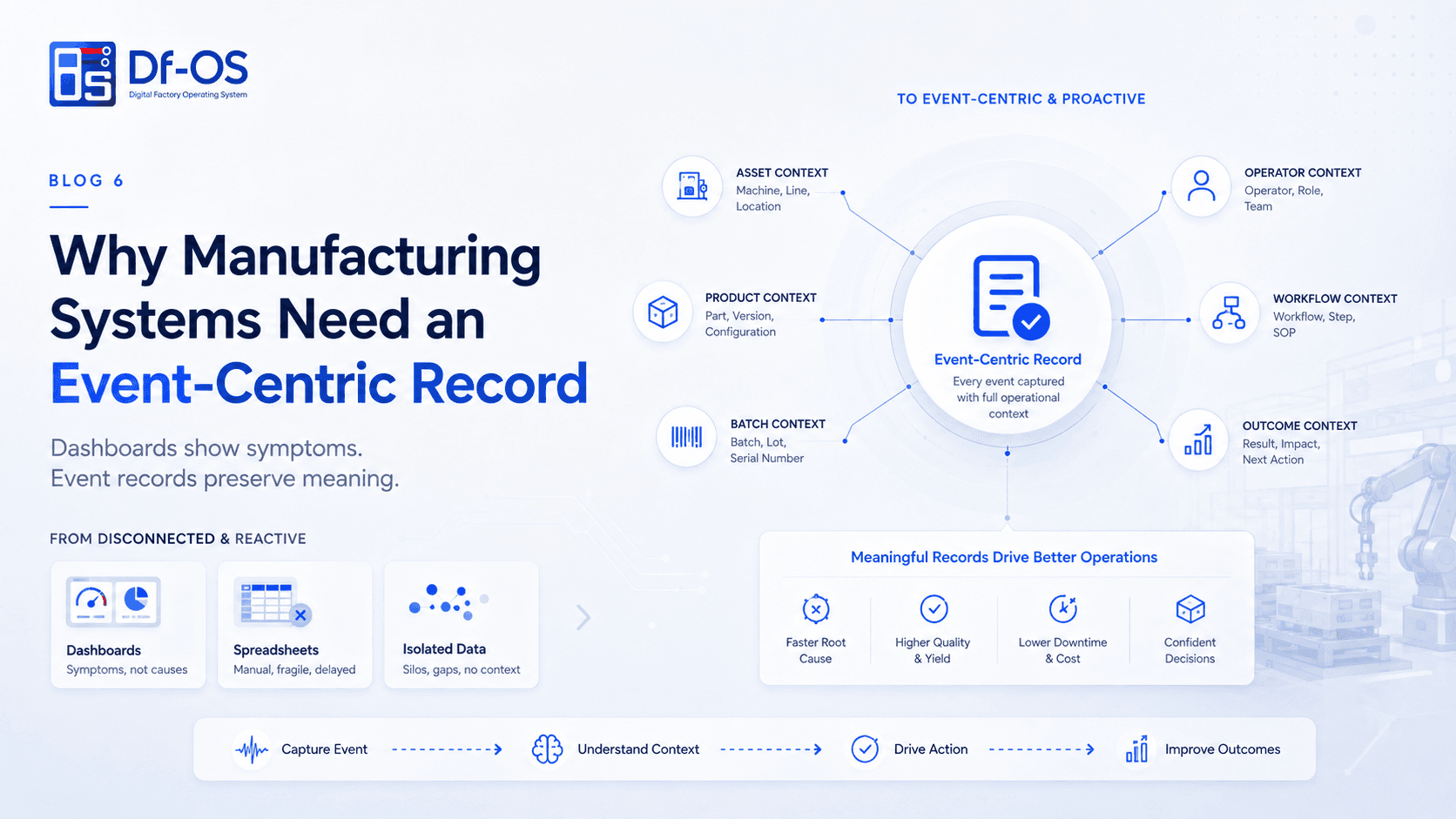
What a 4M Knowledge Graph Means on the Shopfloor
See how a 4M knowledge graph connects Man, Machine, Material and Method around factory events so teams can analyse relationships instead of isolated records.
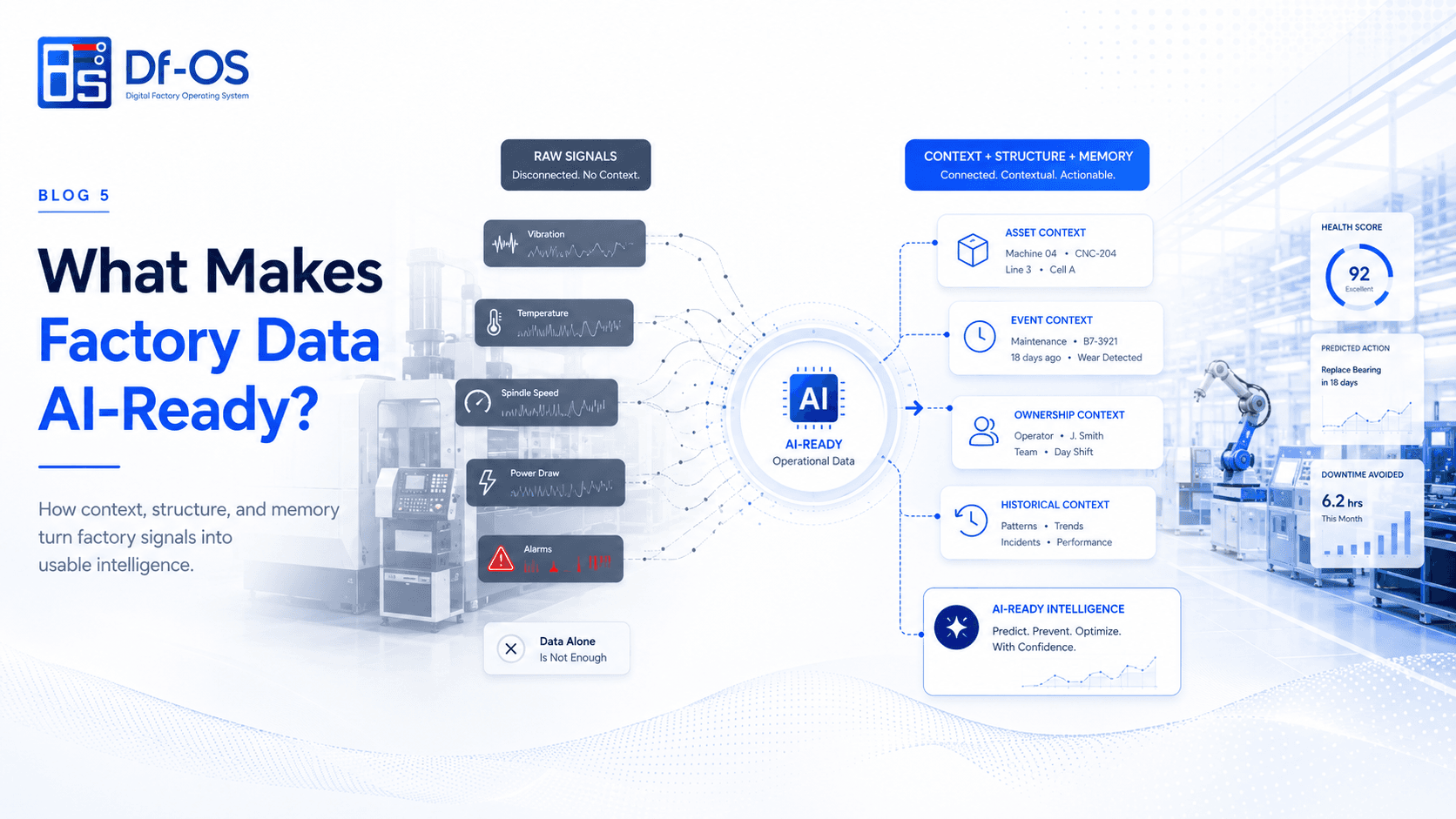
Building Factory Metadata Without Rip and Replace
Build Factory Metadata & Memory around existing brownfield assets and systems by starting with one operating event and expanding the connected context in phases.
Digital Thread vs Factory Metadata & Memory
Digital thread and Factory Metadata & Memory solve different traceability problems: lifecycle continuity versus operating-event context, decisions and outcomes.