
What Vish AI Can Tell a Plant Manager That a Dashboard Cannot
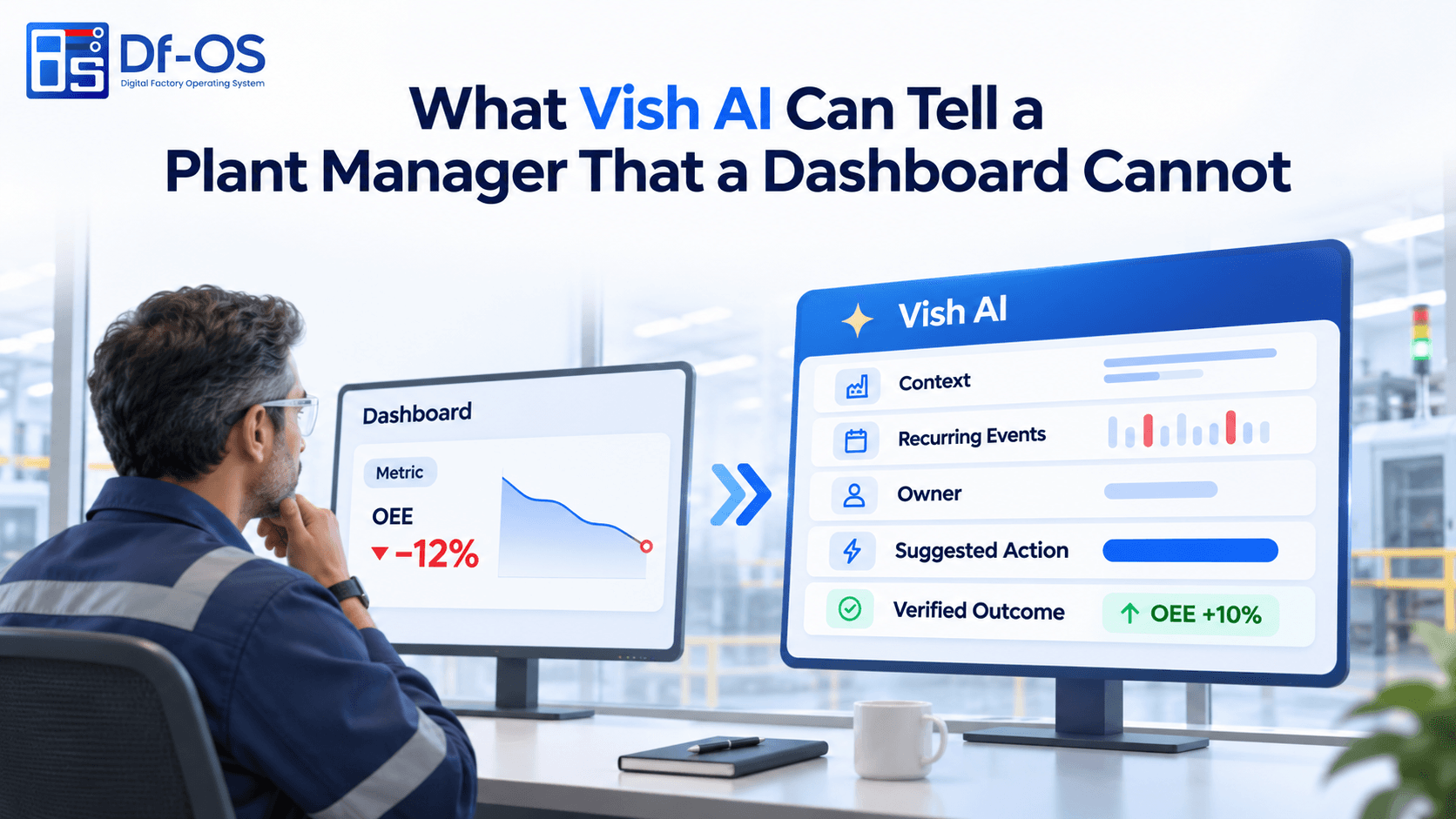
Vish AI is designed to help plant managers move from seeing a metric to understanding the operating events, context, ownership and prior outcomes behind it. A trustworthy factory answer should identify the evidence used, known limitations, relevant workflow and accountable owner. Vish AI supports explanation and recommendation; it does not replace plant-management authority for high-consequence decisions.
A dashboard can show that OEE fell on Line 3. The plant manager still has to work out whether the loss came from microstoppages, a slow changeover, a quality hold or missing material. That answer usually requires searching several records and speaking with multiple teams. The time spent reconstructing the situation is often the difference between resolving a problem during the shift and discussing it the next morning.
Vish AI is positioned as the factory intelligence layer in the Df-OS ecosystem. Its purpose is to help manufacturing teams ask questions of the connected operating record, examine deviations and identify relevant next actions. The important distinction is that a useful factory answer needs evidence, context and ownership. A well-written explanation alone is not enough.
The gap between seeing a metric and understanding a loss
Suppose a plant manager asks, "Why did output on the moulding line miss the morning plan?" A performance chart may show lower availability and increased cycle time. That is useful, but it leaves several practical questions unanswered.
Was the loss concentrated on one mould? Did changeover take longer than planned? Was material moisture outside the approved range? Did quality request additional checks? Was a breakdown acknowledged promptly? Which of those events caused the largest recoverable loss?
A credible answer must connect machine history, operator actions, product and process information, maintenance records and quality workflow status. This is why Df-OS places Factory Metadata & Memory between shopfloor execution and its intelligence layer.
Five questions that matter to a plant manager
1. What actually changed?
The first requirement is to compare the present condition with the relevant baseline. A change in cycle time should be assessed against the product and process being run, not an average across dissimilar SKUs. Similarly, downtime should be connected to reason codes and machine events rather than inferred from a single summary metric.
Vish AI can support queries across available Df-OS records to help bring this context together. The answer should point users toward the underlying observations so a supervisor can challenge it when needed.
2. Is the same problem repeating?
Manufacturing teams often recognise a recurring issue informally. A senior technician remembers that a particular fault usually appears after a setup adjustment, while a production supervisor recalls a similar loss last month. A structured operating history makes that knowledge more accessible beyond the individuals who experienced it.
The question is not merely how many alarms occurred. It is which similar combinations of machine conditions, workflow steps and outcomes occurred previously. Past correlation may guide investigation, but it should not be treated automatically as proof of root cause.
3. Which issue requires attention first?
A plant manager can receive dozens of alerts in a shift. Prioritisation requires a view of severity, duration, production impact, quality risk, open actions and the availability of an appropriate responder.
Vish AI is designed to help identify patterns and priorities across structured records. The operating team still needs agreed rules about what can be deferred, what requires immediate escalation and what demands a qualified review.
4. Who owns the next action?
A recommendation becomes operational when it reaches a responsible person and has a traceable outcome. If a production loss appears linked to an overdue maintenance task, the system should make it possible to check the task, owner, status and escalation history.
This is where Df-OS matters as much as Vish AI. The operating layer holds the workflow and the decision record. Without it, conversational intelligence risks becoming a faster way to discover problems that nobody has been assigned to resolve.
5. Did the response work?
After a maintenance action, did the alarm return? After a process adjustment, did the reject rate improve without creating a new problem? After a material replacement, was the quality hold formally cleared?
These outcome questions make the difference between reporting intelligence and operational learning. Factory Metadata & Memory should preserve the intervention and its verification so that later decisions can draw on real experience.
What a trustworthy factory answer should include
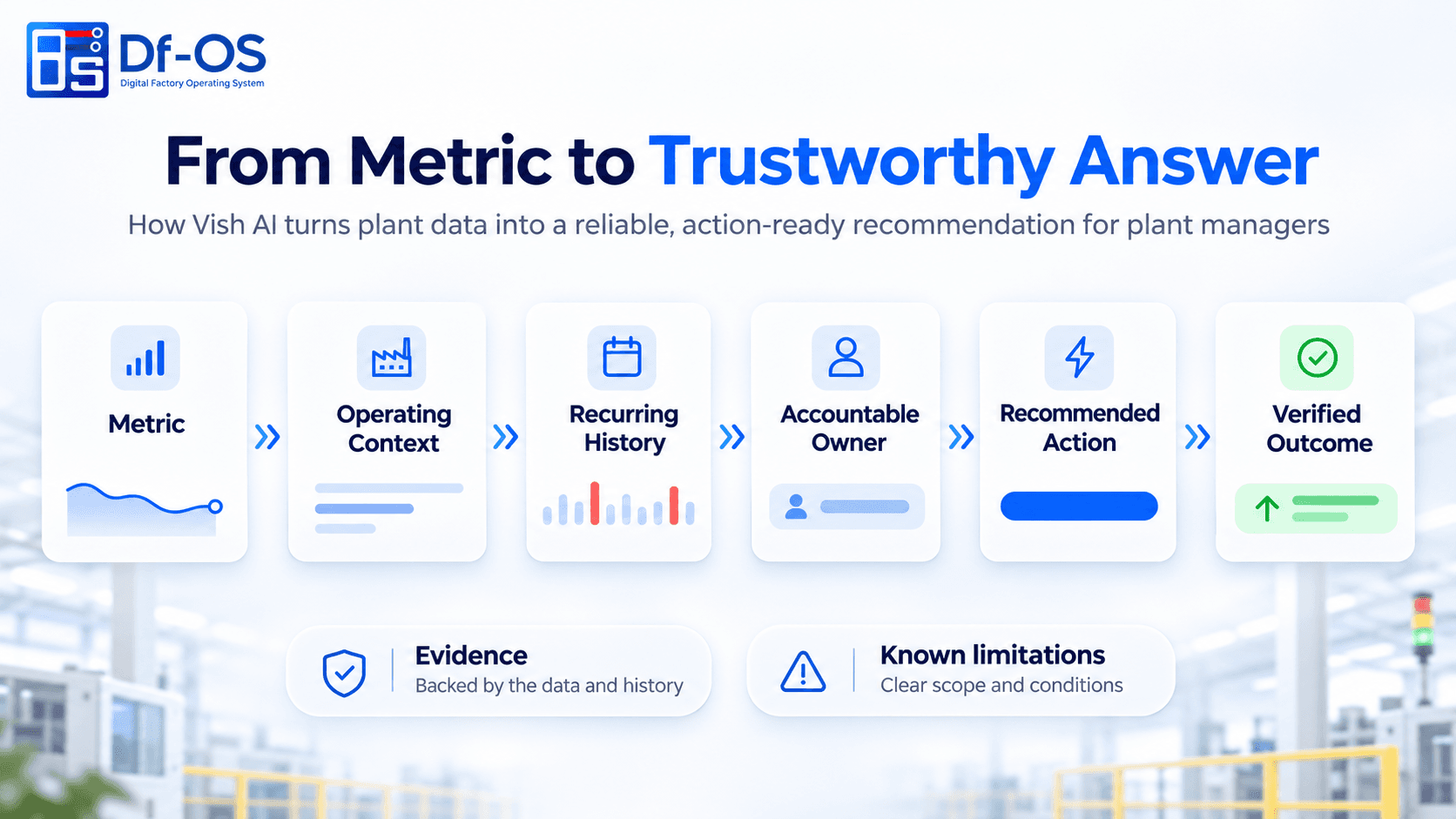
For a high-value operational query, a useful answer should show the period examined, assets or batches included, important events, relevant evidence, known limitations, suggested action and accountable owner. A plant manager should be able to trace a conclusion back to the underlying record.
A response that confidently identifies "operator error" without identifying the approved SOP, training status, machine condition and inspection evidence is not a trustworthy answer. It is a prompt for further investigation.
The same standard applies to recommendations. The proposed action should fall within documented operating rules. If a decision affects safety, product release or process control, appropriate human authority is necessary.
Where conversational intelligence should stop
There are situations where a system should say that the available record is incomplete. An uninstrumented machine, an ambiguous reason code, missing inspection results or a recently changed process specification can weaken an explanation.
Plant managers should evaluate Vish AI against realistic scenarios, including incomplete data and conflicting records. The question is not whether the interface can answer every prompt. It is whether it gives a useful and appropriately qualified response, directs users to supporting evidence and recognises when escalation is required.
From explanation to guided action
The value of Vish AI increases when the factory can connect an explanation to a workflow. A recurring alarm might lead to an inspection request. A rising defect pattern might prompt a quality review. A shift performance question might help assemble the daily management discussion.
As these paths become reliable, selected decisions can move toward guided action. Bounded autonomous execution is a later step and requires additional validation and approval. Df-OS's position is to help manufacturers build this progression through connected execution, X-Konnect machine context and Vish AI decision support.
A seven-question evaluation for buyers
Before choosing factory intelligence software, ask whether it can identify its data sources, interpret role-specific context, preserve approvals, distinguish observation from inference, handle missing data, connect recommendations to workflows and show the result of previous actions.
A good demonstration should use an authentic plant problem with the same exceptions and inconsistencies found in daily operations. The objective is better factory decisions, not a polished conversation.
Test Vish AI Against a Real Plant-Manager Question
Take the three questions your plant manager asks most often, map the records required to answer them, and evaluate Vish AI on real shopfloor context.
Frequently Asked Questions
No. Vish AI supports questions, explanations and recommendations based on available factory records. Plant management remains accountable for operational decisions and approvals.
Stay Ahead of Manufacturing AI
Join 15,000+ plant managers and industrial leaders receiving our bi-weekly reports on AI agents, shopfloor data operations, and the future of smart factories.
Df-OS Editorial Board
Industry experts mapping the future of connected digital factory operating systems and manufacturing intelligence.
Related Insights & Guides
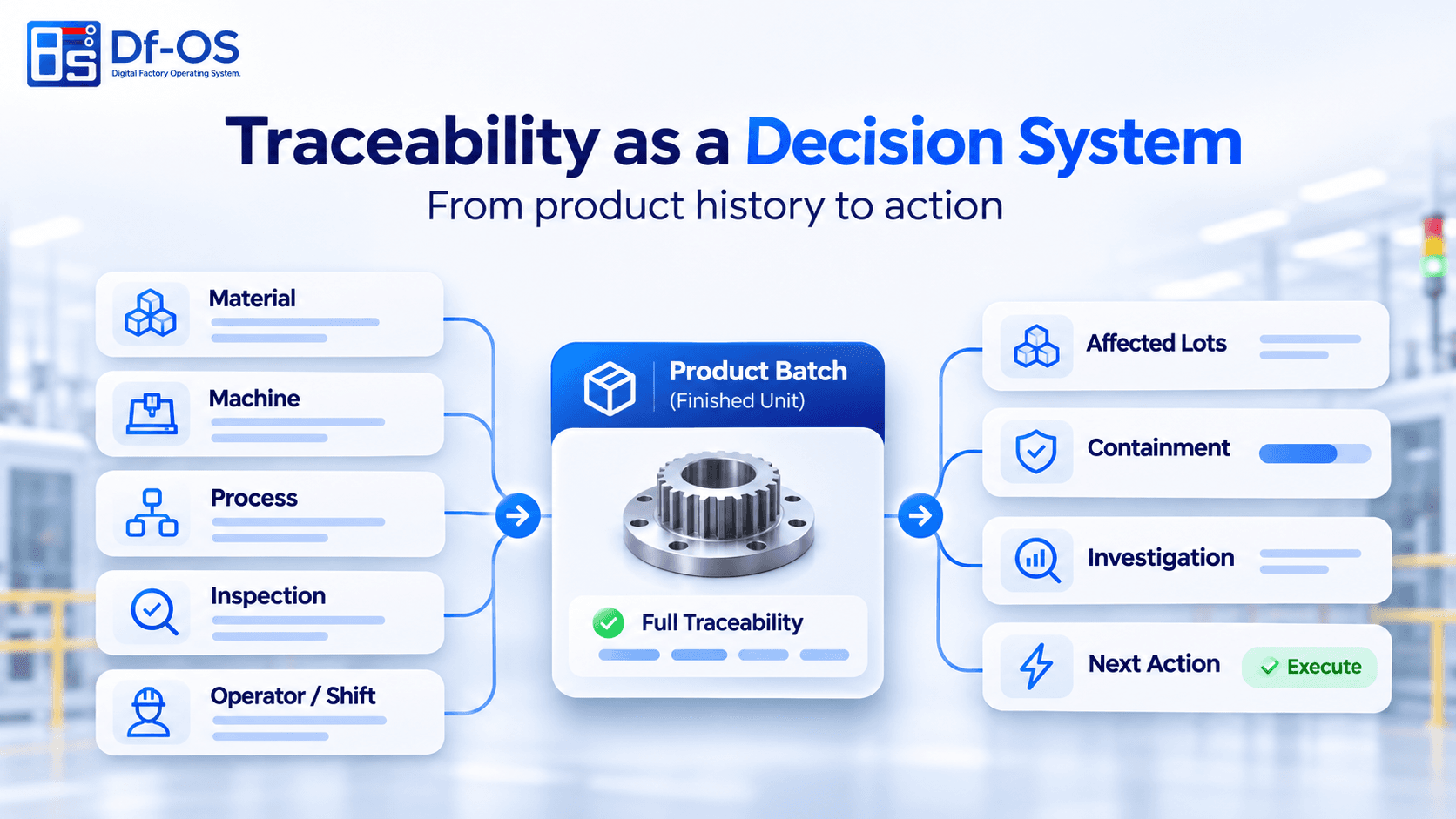
Traceability as a Decision System: How TraceMaster Connects Product History to Action
Traceability becomes operationally valuable when product, material, process, inspection and movement history can support faster containment and investigation decisions.
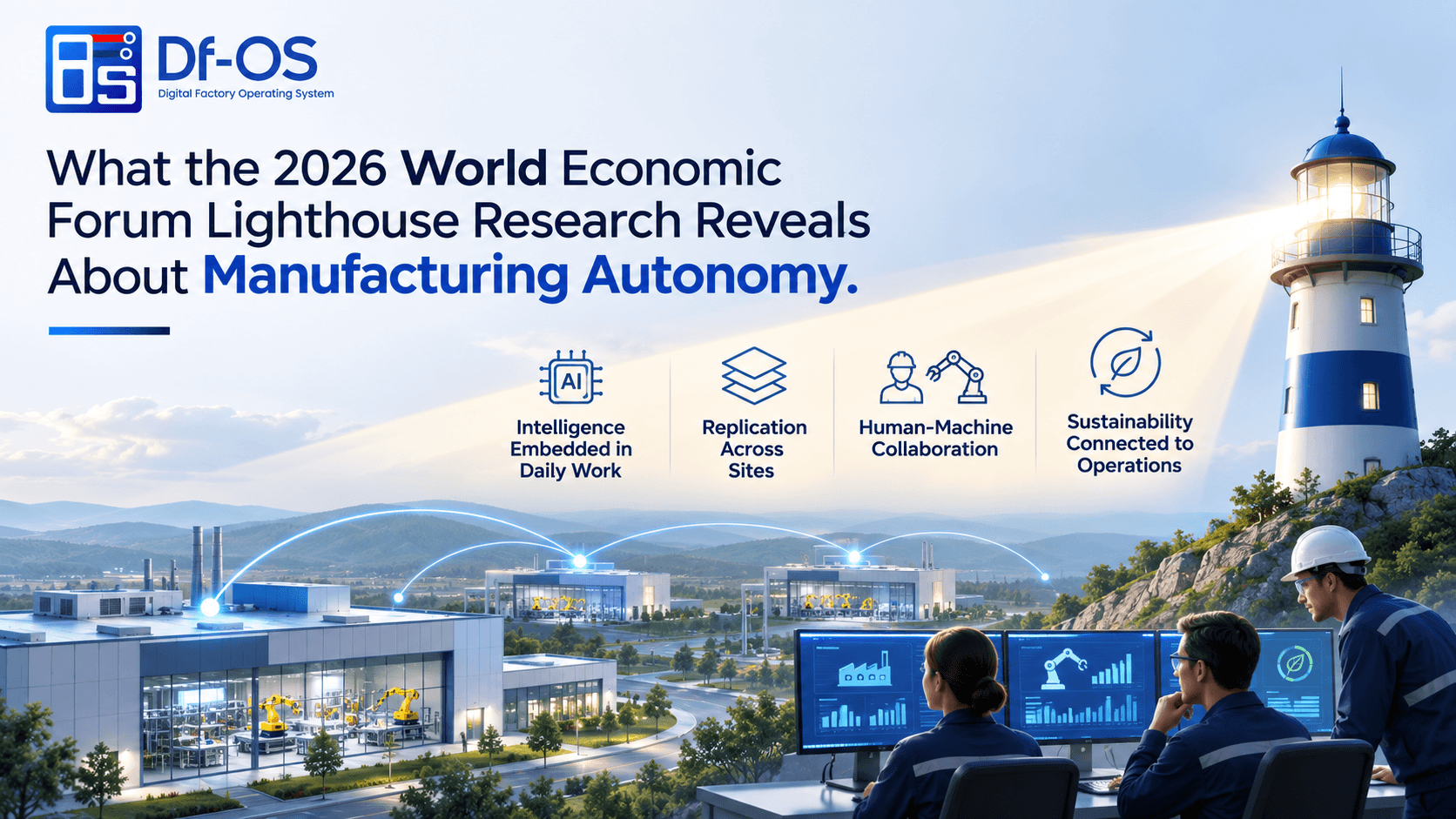
What the 2026 World Economic Forum Lighthouse Research Reveals About Manufacturing Autonomy
A careful reading of 2026 World Economic Forum Lighthouse research and what its evidence implies for manufacturers building repeatable operating capability and autonomy.
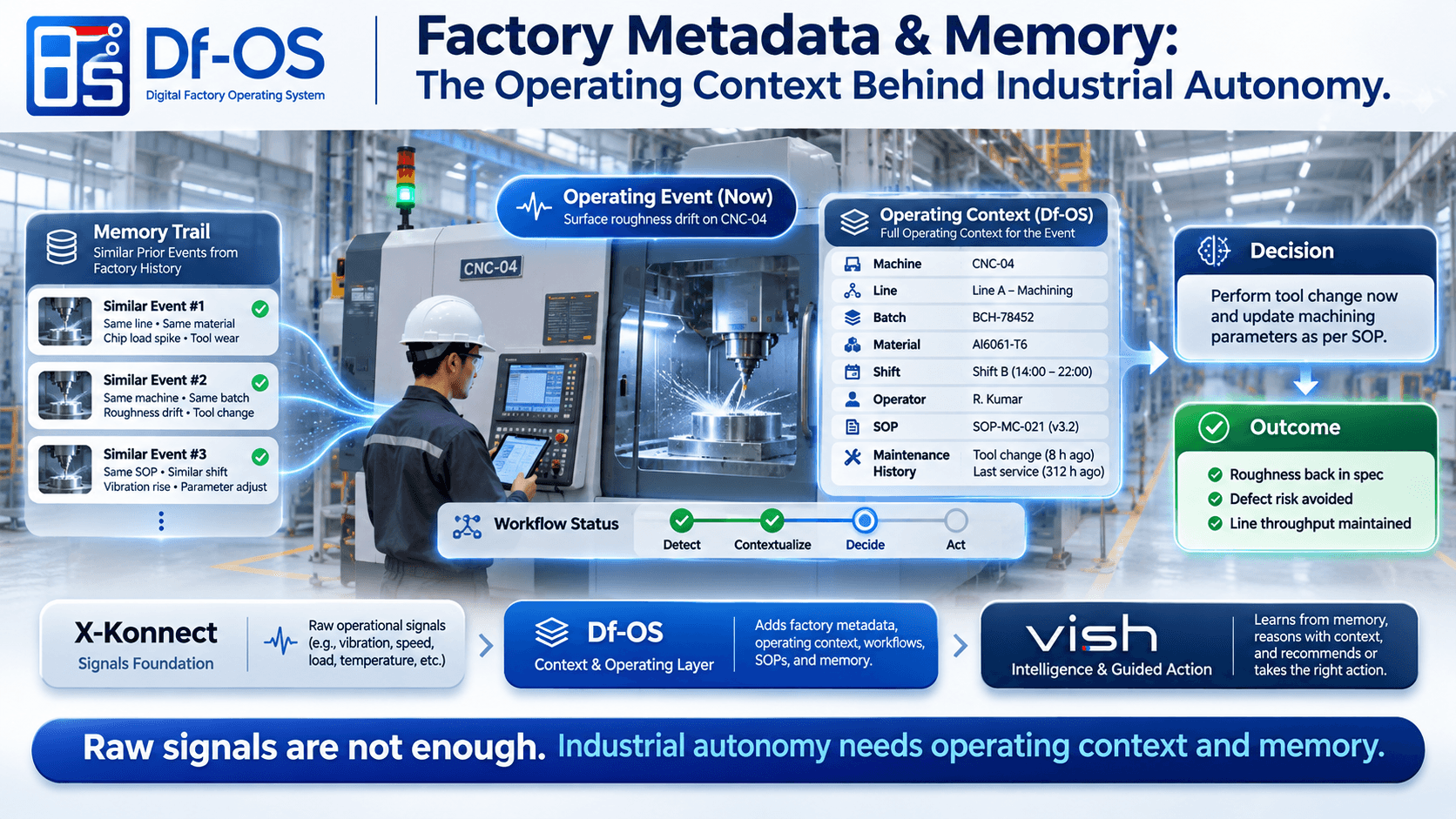
Factory Metadata & Memory: The Operating Context Behind Industrial Autonomy
Why industrial autonomy needs more than machine signals: Factory Metadata & Memory connects events to identities, conditions, workflows, decisions and verified outcomes.