
Df-OS vs MES: Why Traditional Factories Need a Modern Operating Layer
Evaluating the Shopfloor Software Stack
Many manufacturing digital transformation leads ask: 'We already have an MES, why do we need Df-OS?' To answer this, we must examine the difference between transactional logging and dynamic process orchestration.
Traditional MES systems were designed in the 1990s as relational database models built to log progress against fixed work orders. They do a great job of recording *what* was built and *when*. However, they fail to answer *why* a deviation occurred, *how* the ambient temperature affected the recipe yield, or *who* approved a bypass on the line in real time.
Architectural Comparison: Rigidity vs. Flexibility
An MES configuration takes months or years to modify because its workflows are hard-coded into the database schemas. If you change a quality check method on a packaging line, you need external IT consultants to rewrite the execution scripts. Df-OS uses a low-code/no-code configurator, allowing plant managers to build and deploy custom digital workflows in days.
Connectivity and Telemetry Integration
X-Konnect connects raw machine PLCs directly to the Df-OS workflow engine. Instead of manually entering pressure readings or weighment scales, the system captures them automatically, cross-referencing values with current operator tasks to trigger interlocks if variables drift out of spec.
Frequently Asked Questions
Can Df-OS coexist with our current MES?
Yes. Many enterprise manufacturers run Df-OS directly on top of legacy MES setups. Df-OS serves as the modern front-end for operators, capturing granular variables and IIoT metrics, and feeding aggregated execution data back to the MES.
Stay Ahead of Manufacturing AI
Join 15,000+ plant managers and industrial leaders receiving our bi-weekly reports on AI agents, shopfloor data operations, and the future of smart factories.
Df-OS Editorial Board
Industry experts mapping the future of connected digital factory operating systems and manufacturing intelligence.
Related Articles
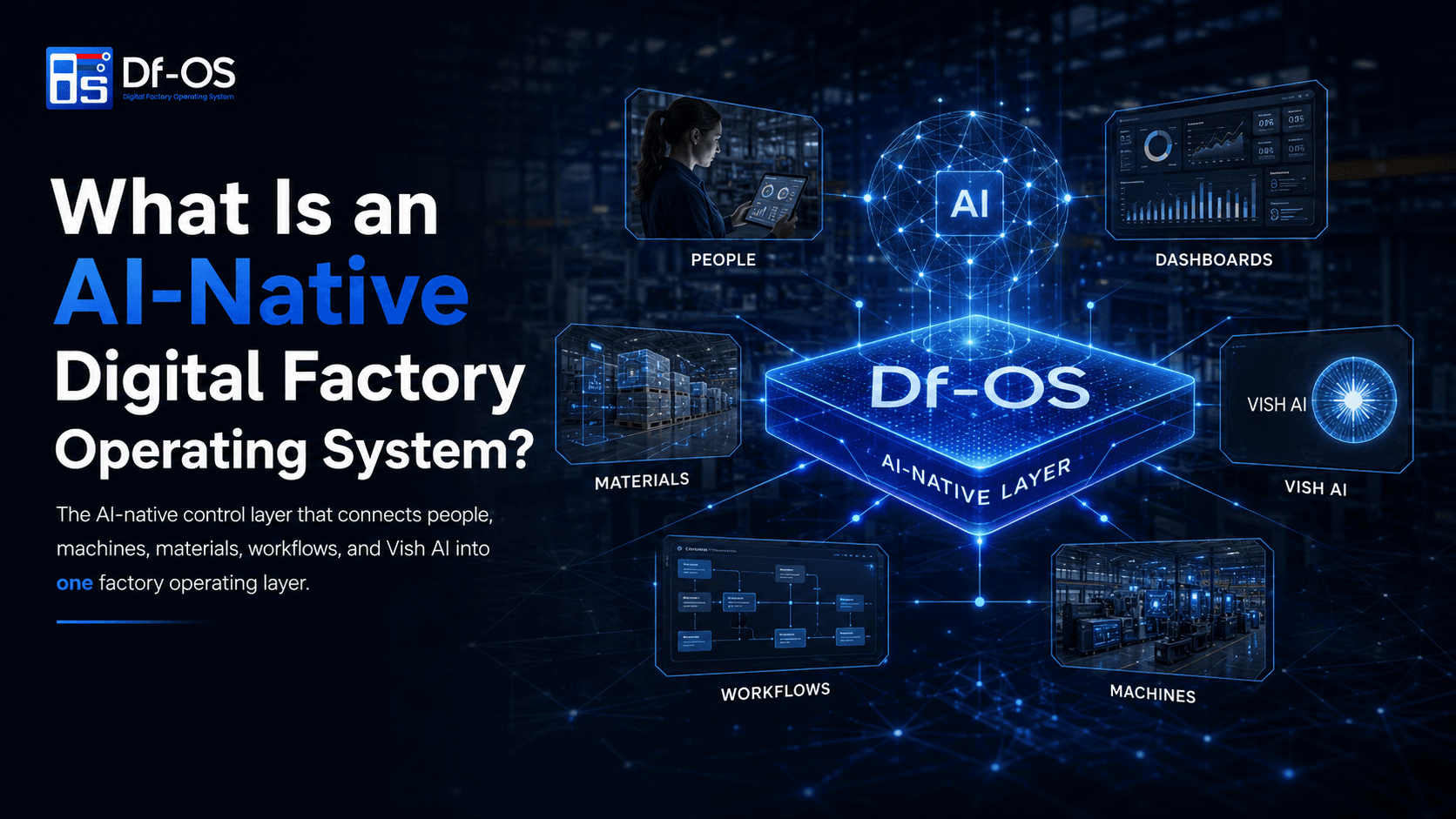
What Is an AI-Native Digital Factory Operating System?
A practical guide to the operating layer modern manufacturers need to move from fragmented shopfloor operations to connected, AI-ready factory intelligence.
What is a Digital Factory Operating System?
Traditional factories run on fragmented MES, ERP, and legacy spreadsheets. A Digital Factory Operating System (Df-OS) creates a unified operating layer, building continuous factory memory for AI-readiness.